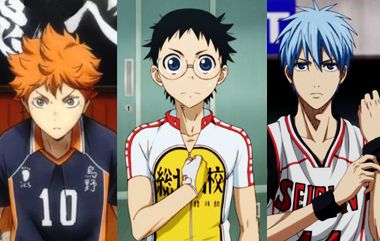
The New Faces of Shonen Sports Anime

hisui_icon_4040 In the past I have talked about my theory of the two major categories of shonen fighting protagonists. I call them the Shonen Hero and the Seinen Hero. The Shonen Hero is what you very stereotypically think of with the genre. They are passionate and ambitious but have almost no experience. Therefore everything must be explained to them but they have an endless pool of potential to draw from and so they learn powerful techniques almost instantly. In contrast the Seinen Hero while still in a shonen magazine feels like a character taken from a series for older men. These character usually have years of training under their belt and tend to be more stoic and coldly driven. They are not perfect but they are 80% of the way to maximum. Usually their journey is about perfecting their skills, adding to their already powerful repertoire, or learning to work with a team. Not every shonen fighting protagonists falls into these two categories. There are some notable exceptions or combinations of the two but nine times out of ten your hero will fall into one of these categories. Naruto and Simon are your stereotypical Shonen Heroes while Luffy and Kenshiro are your stereotypical Seinen Hero.

Until recently I would have told you that sports anime pretty much follows that same formula to the T. The main character who joins the team is either the fresh young buck with no skills but an insane potential and a killer move or a cold ace with the crazy skills but with a major flaw. Like the shonen fighting protagonist there is the very rare exception to this rule but overall they are just as easy to divide into the two camps. The thing is the last few shows we have been watching have added a third archetype that I have never really seen be this predominant until now. They are the Super Support Protagonist.

The thing is this character is a mixture of the Shonen Hero and the Seinen Hero but with some added elements that make them more than just a blend of the other two. Usually the protagonist is the star of the team. They are the character who scores the most points, gets all the important points, and draws all the attention, love, and hate to themselves.  The Super Support Protagonist might do that on occasion but most of the time they are there so all the other characters can shine or work together better. They usually have some technique or place in the team that helps everyone around them. If the Shonen Hero is the fighter, and the Seinen Hero is the wizard, then the Super Support Protagonist in the bard. In years past they would have usually been secondary or tertiary character on a team. Someone who might get an episode of two in the spotlight but no more than that. But apparently this Super Support Protagonist is appearing more and more as the lead in modern sports shows.

narutaki_icon_4040 Kuroko’s Basketball, Yowamushi Pedal, and Haikyu!! have enjoyed immense popularity recently. It may come as no surprise then that they do share some similar qualities.

No longer the stoic genius or the hotblooded ace; more recent heroes of sports anime are the guys who would have been side characters in the past. And it isn’t just their personalities that mark them as previous side characters, but their roles on their teams, too.

Kuroko’s central role is passing the ball. Hinata is the decoy of the court. Onoda pulls the other members along so they can conserve their strength. All of these characters act in the best interest for the rest of the team. Each of them is integral to the team succeeding despite them not necessarily having the role that gets the most outside attention or glory. So intentionally or not, all of these titles end up emphasizing how important a cohesive team is maybe more so than when the central figure is the ace.

Kuroko, Onoda, and Hinata all feel like they occupy the same spot in the team: the soul.

Continue reading

Fate/kaleid liner PRISMA ILLYA 2wei! #009: Pegasus Meteor Fist

hisui_icon_4040 Wow! If the last episode was the appetizer than this episode was the starter. We began off with the first half of last episode being filled with goofiness involving Irisviel but by the last half it was all action. This time other than palate cleanser with Miyu and then Caren this episode was almost all tasty fighting. We even got all three magical girls having a chance to shine with their own specialty being brought to the forefront as well as the weaknesses of their techniques being exposed. These episodes have really reminded me what I loved about the series when it is good.

Also it reminds me that I really want them to fully finish that Fate/Hollow Ataraxia English patch. If Bazett is half amazing in Fate/Hollow as she is here then I actually might be slightly more interested in really experiencing her story then I am in seeing more Saber, silly hamburger jokes, and bathtub sexy times. (OK. That is totally a lie but it is almost true enough to be worth saying.) If anything I hope that whole patch leak lights a fire to get the full patch out sooner rather than later. Fingers are crossed.

Was it just me or did the cold open have music that sounded like what you would hear during an old cop drama when they either recapped that last episode or gave a preview of the current episode?

Continue reading

Ongoing Investigations: Case #241

narutaki_icon_4040 Raqiya (vols. 1-2) by Masao Yajima and Boichi is like a yakuza manga if all the yazuka were part of obscure subsects of Christianity. The series combines intense violence, conspiracy theories, priests, destruction, demons, cults, virgins, and the impending apocalypse.

Boichi’s hyper realistic artwork is astounding. His attention to detail goes from the makes and models of guns and cars to the wrinkles on a person’s face and clothing, nothing is left unattended. Every moment of action, of which there are many, gets the same treatment. You could easily lose yourself in Boichi’s line work.

The story revolves around Luna, a young woman who, after her family dies in a horrible accident, is visited by Abraxas, a demon with the body of a woman and some strange headdress. Luna is revealed to be a “descendent of Norea” and will play an important role in the destruction of the world. A group fronted by the Nitobe corporation is kidnapping virgin women looking for “the goddess” and end up coming after Luna.

The real main character, as I like to call him, Toshiya doesn’t actually show up until chapter 4. He is the good-looking, priest-in-training, who is basically a badass and a genius. He has his best friend Isa who provides the comic relief and, of course, the super hot Luna who he must protect but can never have.

Honestly, at the beginning I kept looking names and references up on the internet. At points, the series just glosses over things as if we are all knee-deep in obscure Christian lore. But then at other times does a decent enough job of telling you what you need to know without going into full-blown exposition. I realized after a while that the series would reveal itself in due time and to just go along for the ride. I’m sure you’d get a lot out of it if you know this stuff or read Wikipedia alongside it, but that doesn’t sound enjoyable to me and shouldn’t be, and isn’t, necessary to enjoy the series.

Raqiya has the super-seinan quality that we don’t get too much of here in the U.S. One Peace Books is a very small publisher so I hope it reaches the manga audience, they need to know about this series. I can imagine this also doing well if you put it into the hands of comic readers.

hisui_icon_4040 If you read manga long enough you being to see little trademarks and tells that other people might not pick up on. You might be able to tell just by a few pages which magazine a title ran in or which manga-ka worked as an assistant for another.  After reading a chapter or two of Raqiya my first thought was, “I think this is a Korean Manhwa” just from the art alone. It turns out I was partially correct. After I read the first two volumes I went online to see if I was right about the origin of the material. At first it seemed like my comic senses were off. Raqiya ran in Kodansha’s Morning magazine. But then I remember that Morning has been making an effort to hire artists from outside of Japan. That is how we got titles like Peepo Choo. While the author Masao Yajima is Japanese the artist Boichi is South Korean.

I just wanted to pat myself on the back for figuring that out before I did any research. I was mostly able to tell because while the men and peripheral women all have a hard seinen manga feeling the heroines and important female characters have this softer ethereal vibe you usually only get from korean comics. It is closer to the way women are depicted in josei or shojo manga but it is not the same. Also the rapid shifts into super deformed even during super serious scenes was another other hint. I’m not saying that all Korean manhwa look like that. While any detailed examination of a country’s comics will show a multitude of styles there tends to be a stereotypical style that most people know that country for. Japan tends to be known for that Shonen Jump style art whereas the US is usually associated with the Marvel and DC super hero comics flavor. In that way I usually think of this style of art when I think of manhwa.

That said the art is great. In fact Boichi’s Sun-Ken Rock is currently available from Crunchyroll manga. I just thought it was worth mentioning.

I will admit that unlike Kate I read Raqiya on the train and followed most of the weird terms without the Internet but that is because I am an old school table top role player. The number one secret you learn as table top role player is your three best and cheapest sources of game supplements are history books, mythology books, and religious texts. They have everything you need for a life time of campaigns, monsters, and organizations.  The thing is the more esoteric and heretical the religious text the better it is. Everyone around your table probably knows the story of Noah and the flood but now many people are well versed in who Abraxas is (unless they are Kunihiko Ikuhara.)  So I admit while I am generally familiar with gnostic references and Vatican assassin conspiracy theories I’m going to guess that is not the case for most people.

That said they seem fairly well researched. Being that most of the Christian mythos here is based on heretical and apocryphal texts it is really hard to call any of it wrong. There is no real King James Version of Gnosticism or Hermeticism. So there is not that much you can get “wrong” but everything I have read so far seems “right.” You are not getting any One-pound Gospel misunderstandings of Christianity. The story is centered around real fringe groups and crazy offshoots and it does that well.

The character dynamic is not what you might initially suspect. At first the story seems firmly centered on Luna. She is the key to either mankind’s salvation or doom. She is the one possessed by Abraxas. She is the one all the crazy cults are looking for. But overall she quickly seems more like a MacGuffin. While she is not totally just a plot device that moves along with the flow of the story she more often than not carried by other character’s choices more than her own. Isa then look like he might be the hero but he quickly seems to move into the side-kick position. It is clear that while Luna is the main character it is Toshiya who is going to be our hero. He is the best fighter, the most well read, and has the most character conflicts. They could surprise us if Luna gets more control over Abraxas’ power but I somehow doubt that will be the case.

The action is really the selling point of series. You get a lot of gun play, explosions, super natural powers, and assassins of all stripes. Also because the series deal with crazy cults and gnostic magic there is a whole lot of sex and nudity (although not usually of the consensual kind). I think Kate put it best when she said this was a real manime title. It distinctly scratches the itch of people who want the testosterone of Mad Bull 34 mixed with the conspiracy elements of The Da Vinci Code.  If that seems up your alley than you might want to check this out.

The Ongoing Investigations are little peeks into what we are watching, reading, or playing outside of our main blog posts. We each pick three things without much rhyme or reason; they are just the most interesting things since the last OI.

Continue reading