
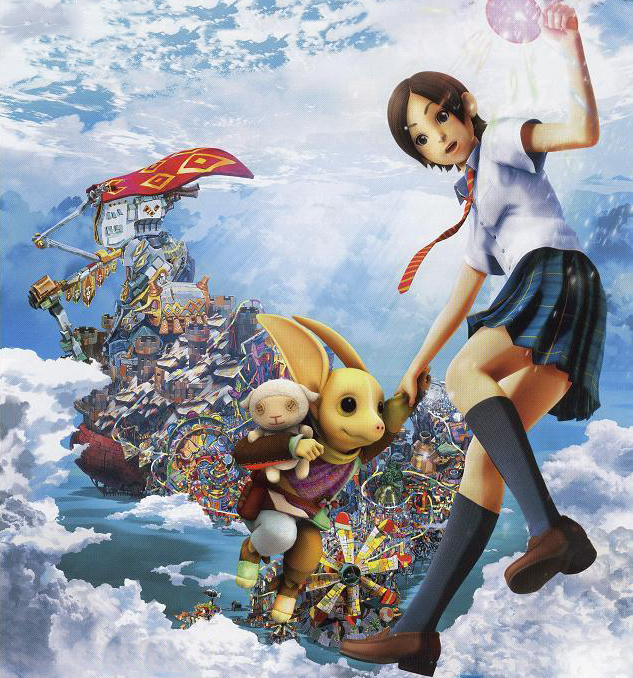
 The New York International Children’s Film Festival is one of the many things that makes me happy I live in NYC. Truth be told I’d probably see all the films if I had the means. Normally, I’d make sure to see all the anime on the list but I just couldn’t bring myself to watch Welcome to the Space Show again, sorry! So instead we opted for some more international flare.
 This year our sampling of the New York International Children’s Film Festival is truly an international experience. While there was an outstanding anime in the lineup, two-thirds of our selections were from non-Japanese animated features. We took in a French film as well as one from China. While a single film is hardly a full representation of the animated output of their respective countries it is still a fun thought experiment to compare and contrast them.

Time of Eve, while not new to me, was still a high priority. Not only did I love the ONA but I wanted to support the title in the hopes of seeing more from its creators or more specifically a continuation to Time of Eve itself. It also helped that the movie has an extra 15-minutes of footage. Time of Eve explores the relationship between human and robot when the lines start to blur. Titles that tackle this subject are about realizing your own humanity and acknowledging it around you, in Time of Eve we explore it through two teens, Rikuo and Masaki. The series is just as engaging a second time around with thoughtful amounts of drama, comedy, and questions. The additions to film are learning just a bit more about a couple of characters, but both of these additions just make you wish the series would go on to tells us their stories further. Like any true movie go-er should, watch through the credits as the stills actually tell you a new story and there is a scene after as well.
We went into the Time of Eve having seen a majority of the movie and knowing it was very good. If you are curious about the ONA series you can check out our review of it or watch it yourself on Crunchyroll. The question on our minds was what was added when they turned the series into a movie. It turns out they added a few new scenes which are mainly used to stitch the 6 episodes together while providing some major insights into the characters and world of the Time of Eve. The major benefit is the Ethics Committee is always being prominently mentioned from the beginning of the movie so they don’t move to the forefront only in the last episode like in the original. The extremely mysterious Setoro also gets a good deal more fleshing out while still retaining his enigmatic nature. They also make the origins of Nagi and the cafe a bit more obvious with a completely new epilogue during the credits. The movie itself is worth a watch for original fans of the show just for those revelations alone. While the movie does make a few things clearer it does introduce some new characters and questions and in doing so is practically begging for a second season. I truly hope that this movie is able to raise the interest and capital to make more of this wonderful science fiction series.



 The New York International Children’s Film Festival is a place I like to experiment and quite often go into movies without much knowledge of them. I guess it comes down to the fact that for many of these films, this may be the only chance to see them, especially on the big screen. With a number of films this year being anime, I was feeling even more of an itch to squeeze in as many screenings as I could. Something about that big screen adds a lot to the experience, at least for me. So with that in mind I went to see Mai Mai Miracle where literally the only thing I knew about it was that it was from Japan.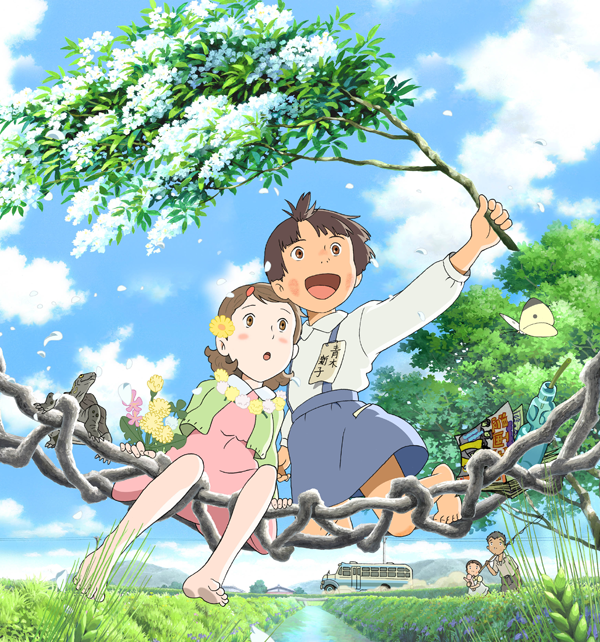
 Reverse Thieves