Manga of the Month: Fist of the North Star

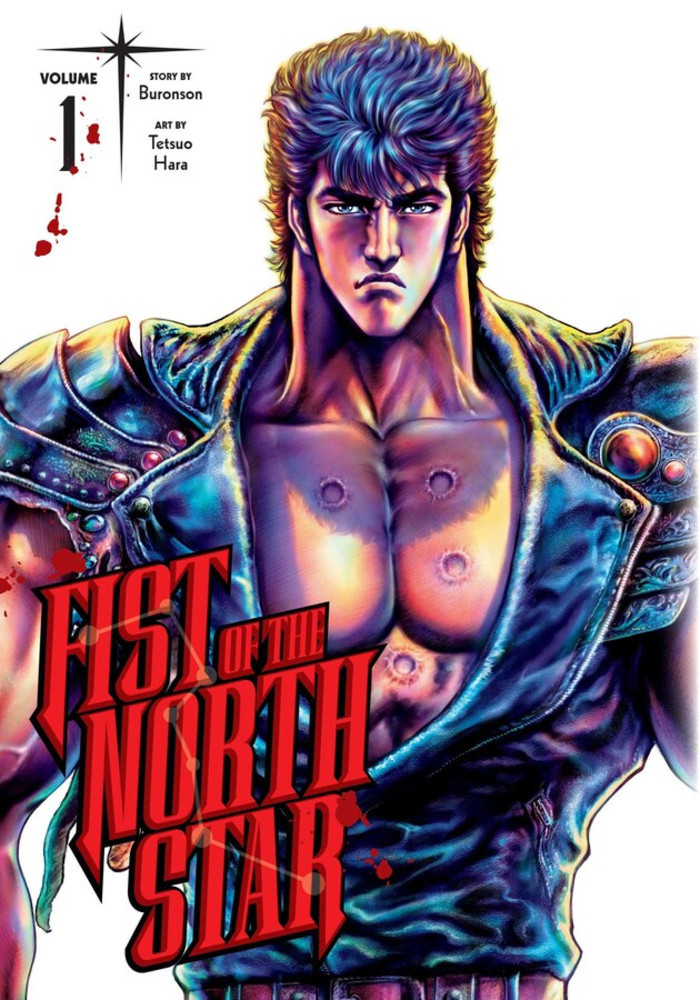
Front cover of volume 1 of Fist of the North Star. It is a pearlescent drawing of a frowning, muscled man with his shirt open. On his chest you can see four round scars. The FOTNS logo is red.

Fist of the North Star by Buronson and Tetsuo Hara

After nuclear disaster strikes, the world is recast as a place where water is a highly sought resource controlled by would-be rulers who use brutality and violence to reign over small oases and enslave those who can’t fight back. Across the devastated landscape, survival is uncertain, betrayal is routine, and the creed of the land is might makes right.

Kenshiro is justice in this savage, unjust world.

Kenshiro is the inheritor of the assassination martial art known as Hokuto Shinken and he unleashes its pressure points-based technique to swiftly kill those who prey on the innocent. Kenshiro is grieving the loss of his abducted fiance Yuria; he sees her in the many people trying to simply live their lives in the barren wasteland. Despite his often stoic nature, his tears flow and his anger flares often in service to those he protects. And as Kenshiro learns where his “brothers” of the Hokuto Shinken school reside, he follows a blood-soaked path to set the world right.

At this point, most fans of anime and manga have probably heard of Fist of the North Star through its killer opening or the various memes even if they haven’t actually watched or read the real thing. So why talk about it now? The editions VIZ is currently releasing—hardcover (physical release, I’m getting it digitally), gorgeous full-color and 2-color art pages included—are something I couldn’t have imagined licensed for U.S. release even five years ago. So this makes it a great time to read this classic to see how much influence it had on shonen and seinen manga like JoJo’s Bizarre Adventure and Berserk, from the incredibly detailed art style to the fight sequences to the special techniques.

(Kate’s special disclaimer: Is Fist of the North Star for everyone? No. It is brutal, gory, glorifies killing, and depicts all woman as childlike and naive no matter their age. Clearly, I recognize these things about Fist of the North Star but I also find its pulpy, absurd story and characters compelling and compulsively readable.)

-Kate
Manga of the Month: Snow White with the Red Hair

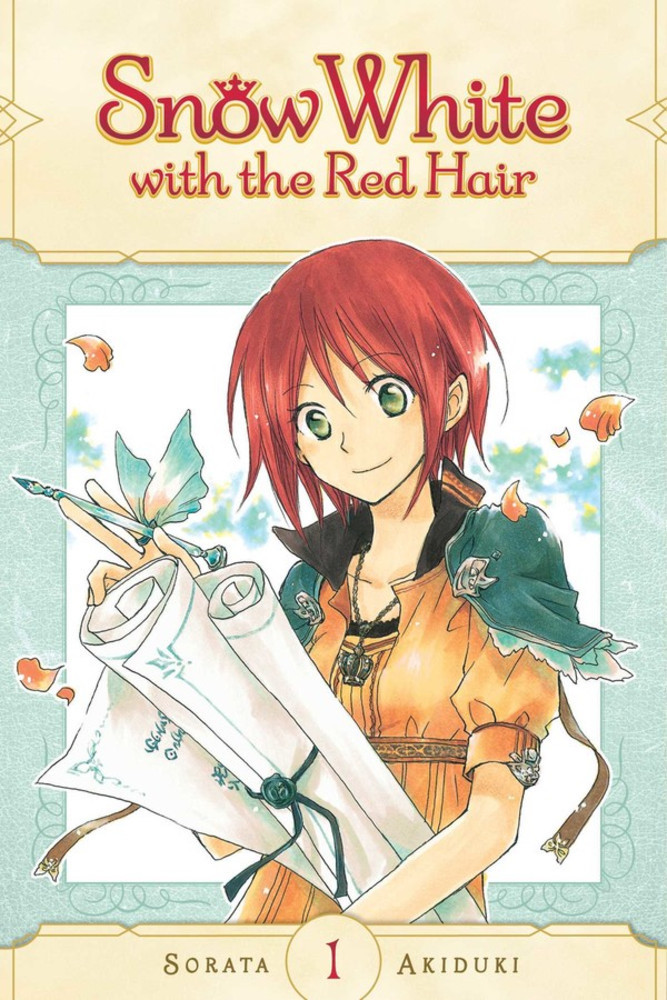
Snow White with the Red Hair by Sorata Akiduki

Over the last year or so, I’ve been rediscovering my passion for Snow White with the Red Hair. Some of you may recall that I absolutely loved the anime and its cast. The manga extends far beyond the anime (and that’s saying something when, as of this writing, the English release is still about 10 books behind the Japanese).

Shirayuki is a self-possessed young woman who made a life for herself as a herbalist in the kingdom of Tanbarun. When she is ordered to become the concubine of the prince, Shirayuki instead decides to leave her home for the neighboring country of Clarines. In no time at all, she is working in the castle of Clarines as a court herbalist swiftly taking on new challenges, and falling in love with a very different prince than the one she left behind.

Despite the title, Snow with the Red Hair is not really a fairy-tale retelling, and the title is only vaguely related to the series’ initial meeting between the main cast. Beyond that, Snow White with the Red Hair becomes about the intertwined lives of Shirayuki and Prince Zen as they pursue their goals, grow as people and a couple, and the people, politics, and machinations of the kingdom around them.

Prince Zen is the second prince of Clarines and ripe to start taking on real responsibilities in the vast kingdom. Zen is down-to-earth, enjoys a little mischief, and chafes at the royal title but also wants to do what is right for the people of Clarines. In the mix is a lovable cast of side characters including the unflappable swordswoman Kiki, the earnest aide Mitsuhide, the aloof messenger Obi, the enigmatic first prince Izana, and the list goes on and on.

The love story at the center of Snow White with the Red Hair is incredibly satisfying and stands up to being a long series without adding in too much overwrought drama. Firstly, Shirayuki and Zen are quick to say they have feelings for the other and want to figure out what that means for them. Second, manga-ka Sorata Akiduki is masterful at creating swoony moments and slow builds. Third, Shirayuki and Zen have major stories outside of their romance that are just as interesting. (Fourth, possibly for me only, is that I am somehow able to 100% believe in Shirayuki and Zen’s love while simultaneously rooting for Obi.)

The story of Clarines goes further and becomes more grandiose than I would have imagined. Two years have passed in the series as of vol. 16 and so much has happened. Shirayuki and Zen have experienced adventures, setbacks, balls, political manipulation, victories, loss, friendship, separation, joy, doubt, love, and so much growth in their lives. Those around them have had similar trajectories and the world just keeps opening up further.

Snow White with the Red Hair boasts strong characters, heartfelt romance, a balance of drama and humor, and a well-crafted world to set it all in. Picking up the manga a few years after the anime has made me even more of a fan of Shirayuki, Zen, Obi and the rest of the gang, and I look forward to every volume to see where the story takes them next.

-Kate

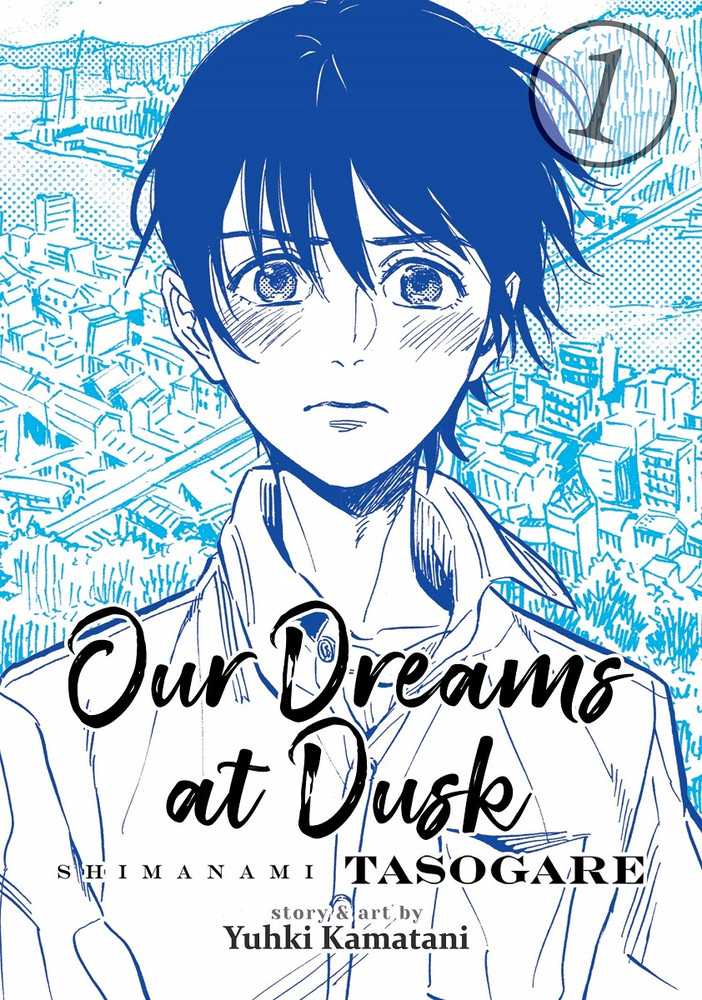
Manga of the Month: Our Dreams at Dusk

Our Dreams at Dusk by Yuhki Kamatani

“You give yourself a little breathing room. But that breathing room is only the thinnest barrier between you and the dangerous maelstrom of reality.”

At the start of Our Dreams at Dusk, Tasuku is reeling from believing he has been outed as gay in his high school. As he stares over the edge of a guardrail, contemplating suicide, a mysterious incident distracts him and leads him to a meeting house of sorts. It’s there he finds a new group of people whose lives and stories bring him a new perspective on himself and the world.

The 4-book series goes on to explore various queer identities, the successes and struggles of Tasuku and those he meets, and the incredible power of finding a community.

The series also touts some abstract and thematic imagery highlighting emotions and moments. Although I was at first wondering if there was a supernatural or magical realism element to the story (and I imagine you might wonder the same after reading just the first chapter), I came to see it more as an artistic choice than a literal one.

One of my favorite pieces of this story is the age range of the characters who gather at the meeting house. It highlights how self-discovery and -acceptance can come at any age, and showed deep empathy for everyone on their own journeys without a roadmap or a right time to finish.

Our Dreams at Dusk is a coming-of-age story that is ageless. It is a beautifully drawn series about people coming together to support one another which manages to be hopeful without shying away from difficult conversations and the pain we all sometimes inflict or endure.

“Even if we get hurt, we have the power to stand up. When we hurt someone, we have the heart to reflect on that.”

-Kate