Manga of the Month: Holmes of Kyoto

Holmes of Kyoto (京都寺町三条のホームズ) by Ichiha Akizuki

 Based on the ongoing novel series, Holmes of Kyoto brings Holmes into the modern era as a young graduate student and apprentice in an antiques shop.

Aoi has only recently relocated to Kyoto. When we first meet her she is skulking outside the Yagashira antique shop debating whether to go in for an appraisal. There she meets Kiyotaka (aka Holmes) who not only reveals much about the items she brings in, but also reads her intentions like an open book. Before Aoi knows it, she has agreed to work part-time at the shop and hone an eye for antiques. Together they find themselves wrapped up in minor mysteries around the Kyoto area.

The Holmes of this story possesses many qualities that have become a staple of the character like being able to read deeply into tiny details of a person’s demeanor, words, clothing, and other attributes; a penchant for being aloof; and not always being completely tactful. Kiyotaka is far less abrasive that some versions of the character. He does have a teasing streak, but is often kind and shows himself to be vulnerable early on.

Both Aoi and Kiyotaka are dealing with loses of love and form a bond over it. While Kiyotaka is further along in his recovery, and has wisdom to share on the subject, it is still clearly a painful piece of the past.

So far the mysteries they’ve encountered have been family affairs where Holmes is brought in to quietly decipher the answer. He gets to the bottom of things, but not without dredging up some family troubles or secrets along the way.

What I enjoy most in the series is the interjection of bits of history whether it be on the intricacies of antiques like pottery and paintings, or on Kyoto’s traditions like the Saio-dai chosen for the Aoi Festival or the Tengu spirits of Kurama-dera.

I initially started watching the anime for this, but I’ve put it aside in favor of the manga. Both are adaptations, but I found the pacing and artwork in Ichiha Akizuki’s version a better matched to the atmosphere of the series.

~kate

Manga of the Month: Frau Faust

Frau Faust by Kore Yamazaki

hisui_icon_4040_round It is always interesting to compare various titles by the same author. Sometimes it will be immediately obvious that two stories are by the same author to the point where you can’t imagine anyone else writing them. Other times you will be blown away when you discover that two stories have the same author. Rumiko Takahashi is a great example of this. It hardly takes a manga expert to figure of that Ranma ½ and InuYasha are by the same woman but Mermaid Saga feels very different from her normal work. But no matter where on the spectrum any pair of titles is there are usually a few subtle thumbprints that are always present in an artist’s that work can appear no matter who radically different the base story is. It is just some artists have a distinct repertoire that is unmistakable in almost anything they do whereas others are more chameleon like. Throw a rock on the internet and you will find something about the common practices of any prolific artist.
I mention this because some of the most interesting analysis can come from looking a two titles from the same artist that are fairly distinct while still having enough in common that you can also get a sense of their core style while also seeing where they tweak their formula to create a different story. For a good analysis you have to pick two titles that don’t just feel like carbon copies with different names at the top. I bring this up because I feel Frau Faust and The Ancient Magus’ Bride are two manga that are perfect for this sort of examination. While you would never mistake a chapter of Frau Faust as one from The Ancient Magus’ Bride at the same time they are both unmistakably by Kore Yamazaki. Lets look what makes these two series different from each other while still having many of the same points of appeal.

Continue reading

Manga of the Month: Isabella Bird in Wonderland

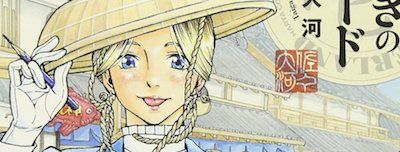
Isabella Bird in Wonderland (ふしぎの国のバード) by Taiga Sassa

Adventuress and writer Isabella Bird arrived in 1870s-era Japan with a grand plan to travel all through the country recording her experience with the culture and people along the way. But Japan was extensively closed to foreigners; few if any were let past the major cities and left to explore the greater country.

Isabella’s fame as a traveler, the help of a friend, and a little extra time spent in Edo gained her access to a rare, unrestricted passport. With her indispensable interpreter Ito in tow, Isabella set off to see the country and make her way north to meet the Ainu people.

During the Meiji-restoration Japan was in a place of great transition. New political rule and a move to new technological advances were soon to change the face of the country and make certain ways of life by-gone. Isabella’s culture shock was played for laughs, but she was deeply interested in the ways of this foreign world and respected it. She was full of humor, wit, kindness, and curiosity.

Taiga Sassa’s art is lush with minute details bring the period to life, and it was inevitable that I would pour over each crafted item, piece of clothing, or architectural component just as Isabella did. Sassa’s precise line work extends to the characters and their expressions as well whether conveying something subtle with their eyes or an over-top reaction. A beautiful manga that feels in line with the work of Kaoru Mori.

Isabella and her travels are real! This manga is based on her actual writings. Having not read Isabella Bird’s travel diary Unbeaten Tracks in Japan, I don’t know how closely this manga sticks to its source material. A rare bilingual edition of the first volume of this manga came out in Japan (which is how I read it).

~kate