Manga of the Month: Wolfsmund

Wolfsmund (狼の口 ヴォルフスムント)
by Mitsuhisa Kuji
Wolfsmund

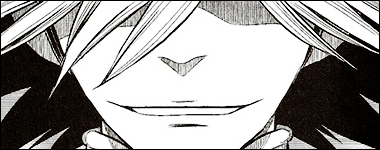
narutaki_icon_4040 Wolfsmund spins a tale from mid-17th century Europe centering around the St. Gotthard Pass (a fortress nicknamed Wolfsmund) in the Alps and the ensuing Swiss peasant rebellions. The story takes us from the whispered words of unrest through (so far) all-out assault on the odious fortress known as Wolfsmund.

There are many character threads being pulled in different directions by the master of the fortress, Wolfram, and the hope of the peasant cause, Walter, son of Wilhelm Tell. Walter runs as hot as Wolfram runs cold and that distinction becomes more and more pronounced with each passing death. But Wolfram emerges as the more interesting character of the story despite Walter’s role as would-be hero. Wolfram is established early on as a fascinating, but truly villainous, character and nothing about the series suggests a heroic happy-ending for the rest of the cast.

Wolfsmund is incredibly violent in a hundred different ways. In an odd twist, scenes of the fortress being attacked are actually less gruesome than many earlier, smaller, attempts to snuff out rebels. Not to mention the truly vile and disturbing methods of Wolfram himself.

In the hands of Mitsuhisa Kuji, Wolfsmund’s emerges as a brutal historical fantasy with razor-sharp art. From harrowing scenes of people climbing the mountains in an attempt to skirt the pass to Wolfram’s unnerving calm as he quietly questions travelers, the reputation of Wolfsmund as a place without mercy and a master who is beguiling in how frightening he is is executed to perfection.

~ kate

Manga of the Month: Master Keaton

Master Keaton (MASTERキートン)
by Naoki UrasawaHokusei Katsushika, and Takashi Nagasaki

hisui_icon_4040 Master Keaton definitely has an interesting history in the United States. I’m sure there were fans of Naoki Urasawa before 2003 but Yawara! A Fashionable Judo Girl never had anywhere near the success of its sister anime Ranma ½ in the English-speaking fandom and all the fans of Pineapple Army could probably fit in one room. So when the Master Keaton anime was released by Geneon on June 10, 2003 it hardly had any name cache. The series was a critical darling but a financial flop. Despite that the anime garnered itself a small but devoted following. Then jump ahead to February 21, 2006 when the Monster manga is released. That was the title that made Naoki Urasawa a name in otaku circles. 20th Century Boys and Pluto only solidified his reputation. So that small fandom for Master Keaton finally had hope that maybe the manga that spawned the series they loved might be released in English. But that was not meant to be.
Apparently the title was tied up in a legal battle between Naoki Urasawa and Hokusei Katsushika’s estate. The battle was fierce enough that not only could the title not be licensed in the US but they could not even reprint the series in Japan. So it seemed like a series that would always just be out of reach. Then in March of 2012 Naoki Urasawa started Master Keaton Remaster, a sequel to the original series, as sort of capstone to the end of the legal battle that had engulfed Master Keaton. It seemed that there was hope again and on Viz licensed Master Keaton. So after that long journey December 16, 2014 marked the day fans could finally buy Master Keaton. I have talked about the series several times on the blog but now I can official endorse it as a series that you can just order on-line and buy.

Continue reading

Manga of the Month: Birdmen

Birdmen (BIRDMEN -バードメン-)
by Yellow Tanabe

narutaki_icon_4040 After the initial chapter of Birdmen, I found myself scratching my head. Nothing was clear in chapter one (which is a prologue), I didn’t know what the story was going to be about at all. But there is a hook: a repeated rumor about a mysterious man with wings. Then, we get a glimpse of him at the end of chapter two (also the prologue) just as a bus containing all our main characters goes careening off a cliff. Then, chapter three returns to seemingly normal life, but something is just off as glimpses of memory and powers begin.

The way Yellow Tanabe constructs the beginning of Birdmen creates the tension and unease you might expect from a horror story, which it somewhat is, but Birdmen is more like Ms. Tanabe’s version of superheroes.

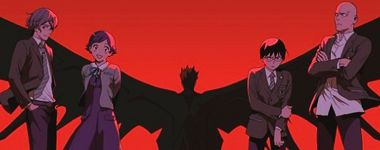
Two sets of friends, Karasuma and Kamoda, Tsubame and Sagisawa, who have only just met find themselves on the verge of death as their bus crashes. The Birdman saves them which endows them with the same powers as he. Just as the group starts to realize their abilities, a portal in the sky drops a monster into their town.

Yellow Tanabe takes these elements and combines them with a good sense of humor, popping up only at the appropriate times. There is even a classic superhero moment as Karasuma realizes he doesn’t need his glasses anymore after gaining his powers.

The entire first volume is an origin story which sets up everything that is to come. We have a five person team, each with a distinctive personality but so far it hasn’t felt like the well trodden path you might expect. Karasuma attitude feels downright out-of-place as he feels the world just doesn’t measure up and has no appreciation for his intellect. Kamoda’s shaved head and mean face make him an odd bestie for reserved and sheeple-hating Karasuma. None of the cast are particularly keen on their powers. So far everything feels right without feeling over done.

Birdmen has a winning combination of superheroes, humor, and horror. The more I read, the more I want to read.

~ kate