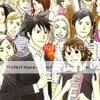
There are lots of sub-genres of shojo manga but romance is hands down the biggest of them all. Even when the main plot isn’t just a love story, more often than not there is still a romance in it. So it comes as no real shock that most people relate the pursuit of love to shojo manga. There are certain things that come to mind when thinking of romance, like most people it comes from what we see in the media, at least the immediate things. This is greatly reflected in romance written for women. There is a kind of strange conversation that goes around in my head about it. It goes something like this: the perception of how woman want to be treated comes from what we see in movies, TV, and books but are those images merely what society tells us? Or do they really exist because women like that, they watch and read it so some of those ideas must resonate within them as desirable. Cliches exist for a reason.
 Feminists and psychologists have argued about the answer to that question for years. For a long time, people have wondered how much of our taste is dictated by our biological sex and how much of it is learned from our physiological gender. The main problem is they are so intrinsically linked; that it is quite possible why we will never be able to separate what contributes to what and how much it contributes. Sufficed to say a majority of women are not going to stop asking for romance in their literature anytime soon. However, the particulars of how those romantic stories are told will change from year to year as it always has.
One might also say to themselves, well there are a certain type of women that like to read romance. While I grant you that not all women like romance in their reading, a good portion do and it doesn’t seem to have any rhyme or reason to who they are in real life. Like many types of fiction, a lot of it is escapist literature and who can’t really put a label on who wants to escape or not.
I have yet to really meet any women who are anti-romance, but I know they exists. I suppose that speaks to how many women like romantic literature. Certain tomboys and nerdy girls will have a preference for more masculine literature but I would say even most of them will still willingly and even eagerly read something with a romantic bent. The only thing that will turn people off will be pure romance, Harlequin-style novels.
I totally agree. Even something like fantasy novels, which has a wide male readership, has a lot of romance in them. I also think some females insert romance, even when it may not be there. That is a whole other discussion though. But I think we can agree that woman like romance in their stories at varying degrees. This might even be doubly so for manga. I don’t know why that is, but it seems to be. It works with its own set of rules for romance!
The ever present confession, although this is a staple across the board, this is really prominent in shojo manga. I always find this very intriguing, it is almost as if you can’t actually pursue someone without it! Sometimes there is a lot of outside pressure to confess. You often see other females insisting that a girl confess her feelings because it isn’t “fair” to be around the guy without it being said. Example, Prafait Tic! our main character has a crush on Daiya. They become friends and hang out a lot. So all the girls gang up and and basically bully her into prematurely telling him she likes him. The reasoning was: all the other girls that like him aren’t friends with him and can’t be around him all the time, but she gets to because she hasn’t confessed and that isn’t right. There seems to be some sort of split on being friends first.
I remember a conversation we had about the fact that most people we knew just sort of fell into relationships. Most of the time there was no formal courtship and grand romance. Both people just sort of realize they liked each other and the next thing they know they are dating. In most shojo titles, the courtship ritual is usually very stylized. In anime you always see people meeting and talking on top of the roof of the school. From what I understand this is much less common than it really is in Japan. Anime likes to exaggerate things for flavor and effect.
I think this also creates a more awkward situation than say being friends first. The feelings are out there and they know it, so every little move has meaning. Of course, with all things there are extremes. So sometimes it goes the completely other direction till what you get is a girl thrown into a relationship with random guy that she has met for 5 minutes.
I think to put it in manly terms, the difference between shojo dating and real life courtship is the difference between a real street brawl and a manga fight sequence. A real fight tends to be clumsy, awkward, brutal, and sometimes even embarrassing. Manga fight sequences tend to be stylized, clean, and artistic. Think about the differences between the fights in the movie Rashomon. Shojo romance is the same way. Heck, it’s not much of an exaggeration to take the lines I said about fight and merely replace the word courtship for fight.
In general, it wouldn’t be a love story in manga without multiple guys falling for our heroine. Typically they like the perfect shape, the triangle, but that doesn’t stop them from throwing 3, 4 or even more our main character’s way. But the triangle is most popular and within that triangle you usually have an angsty boy with dark hair and a funny, spirited boy with light hair. I guess they want both sides of the coin. And up until recently, I always thought the angsty boy won. However, I dunno if writers are changing, taste is changing, or I have just picked up the right manga for me, but it seems to be 50/50 on who our girl ends up with.
Manga like any other form of literature will have unending waves of trends and then backlash to those trends. I think certain manga artists tend to have a preference in the dark-haired angsty guy vs. light-haired funny guy war. Certain manga artists are guaranteed to have the heroine fall in love with the stock character model boy that she uses in every manga. I’m looking right at you Yuu Watase and Rumiko Takahashi.
Wait, wait in Absolute Boyfriend our main heroine falls for a blond, who is funny! Of course he is a robot…and there is the other guy who does look like Taka-clone (aka Takahome from Fushigi Yuugi). Essentially, the writer is guaranteeing the reader will like someone and hopefully enough to follow the story till the end. I have to think on that one. But that easily leads to want I wanted to talk about next: Pretty Boys. One of the most important things that shojo writers have given us! And this is certainly something very unique to Japan, well Asia really. It actually has roots in very historical arenas and isn’t merely a phenomenon of the age.
Pretty boys and shojo manga are pretty much synonymous. You show me a shojo manga without a bishonen and I will show you a shojo manga that did not make it past 2 volumes. Bishonen are one of those odd things that it takes some people a little getting used to when they first start reading manga. But once most girls accept it they eat up bishonen with spoon and a side order of BL. Even shonen manga will always throw in a bishonen to attract a cross gender readership. Even as early as Saint Seiya they have been throwing pretty boys in fighting manga to get a female readership. I mean if girls did not at least glance at shonen manga because of the bishonen guys then why is there so much Renji x Byakuya fanart.
Anyway! In a lot of josei manga, I see this approached a little differently (I wish I could read more josei). There is often many suitors but most times there is no real doubt about who the character is going to be with. Take Saiunkoku, while there are other characters in love with both Shuurei and Ryuuki, we know the story is about them and the growth of their relationship rather than a battle to see who wins their hearts.
Josei manga also tends to have a more realistic view of love and romance where as shojo tends to have a more idealized view of love. There is hardly a hard and fast rule but definitely a trend. I assume this comes from the fact that the average josei reader has gone through one or two relationships. There by it more easily relate to a more realistic relationship. In Nodame Cantabile I don’t ever think we are ever unsure if Nodame and Chiaki will end up together. Nodame is more about how their relationship progresses as they try to graduate music school and find their place in the world of professional music. If an older reader wishes to read about a more idealistic relationship they can still pick from a wide variety of more stylized shojo manga.
And really, there is also lots of so cute and sweet youcouldrotyourteeth shojo manga. Like you have to take a break between chapters from the sparkles! These the ultimate in perfect boy fantasies. If a boy appears without sparkles and/or flowers he is soooo not worth the time. I love the sparkles if only to give me a minute of laughter. This is also one of the most commonly parodied things in comedy anime and manga.
You forgot my favorite part of shojo manga. The hand hold. In many shojo manga aimed at a slightly younger or more conservative audience, you will still have sex but it can’t be as graphic as magazines aimed at older readers. So, if they want you to know a couple is having sex but can’t show it, they will insert the Shojo Hand Hold. Any experienced shojo reader will recognize it right away. It is when they cut away from a couple in a rather intimate embrace and only show the two characters holding hands with their fingers intertwined. Then they cut back to them in bed after the act. For some reason, I just find it hysterical.
I think the most grounded shojo manga really comes from the comedy-romance which makes up a big portion of shojo love stories. It has enough drama to keep you interested but it also makes you laugh and feel happy with the outcomes without using too much angst to do it. These also seem the most real to me, but that is just my personal view on life. Most relationships are a good part comedy. These types of stories seem to gain the largest fan followings, i.e. Fruits Basket, Love*Com, Ouran High School Host Club, etc. Then there is a whole other sector of overly dramatic stories. Which sometimes jump into comedy from being so ridiculous. But these are somewhat more mature stories with dramatic plots, angst, and often times sex.
I tend to see most relationships as tragedy and heartbreak. I suppose this is one of those things that very easily show the difference in our world views. But for exactly the opposite reason, I tend to like romantic comedies as well. I like the fact that they put a healthy dose of comedy in what is otherwise angst and tension that is in a normal relationship. It can be argued either way but I would put Fruits Basket in the mostly drama category. It certainly has a healthy amount of comedy but I feel Fruits Basket focus is on the drama. Love*Com and Host Club seem more comedy based with Love*Com having a healthy dose of drama.
Well, I would put Fruits Basket in the same section as Kare Kano which starts with a strong dose of comedy which tapers as the series goes on.
Aggression plays a big role all around. This one is always the hardest for me to understand because of my own views. The completely wilted flower heroine (I say that with spite) is ever present making zero decisions for herself while simultaneously being desired by ever boy on the block. This has both to do with societal standards and also the fantasy. Just because a girl might read some manga with very aggressive men in it, doesn’t necessarily reflect on how she would want to be treated.
Well in both Eastern and Western culture we generally assume that it is the man who peruses the woman and the man who asks out the woman. It is not uncommon or shocking to see a woman chase a man in today’s society but it is still seen as against the norm.
I guess I should say not just aggression then but dominance and control. There are varying degrees, from the guy being the pursuer; to a guy forcing himself on a girl. What the hell is with the rape/almost rape!? I mean seriously if we put our stock on manga you would think there are like rapist hiding behind every lamppost in Japan. And not just rapist, but totally hot rapists who will rape you and you will secretly like it. And then you might be saved, you might not be, but you have a good chance you will meet a decent guy later on but you won’t find him as great as your rapist. I wish I was joking. I’m gonna go cry now.
Well, I always find it odd that there are a good number of women who have rape fantasies so I’m sure that little fact feeds into it’s prevalence in manga. The Japanese seem to have little to no compulsion against playing with certain taboo or uncomfortable topics in manga. Rape is understandably a sensitive hot topic so it can easily make any discussion about it sensitive and difficult.
It certainly is with me. I don’t find sexual violence in any way, shape, or form enjoyable. But as I said before, judging people’s actual taste based on what they watch and read is sort of making a leap.
That is definitely true. I just can’t find any good reason why rape has become such a tremendously popular plot device. I’m sure there are several reasons why it has popped up as a theme, but I can’t easily point to any. They will even use it in shonen and seinen manga. I guess my only other theory is on a certain level rape is one of the easiest and simply illustrated villainies. A rapist is a clearly identified villain and therefore anyone who steps in to save you from such a fiend is a hero. As for why a rapist would ever been seen a sympathetic or easily forgiven character I really can’t explain that. I can’t tell you how many times I have seen characters attempt to rape someone in a series and then be forgiven a little while later. It happens in Rose of Versailles, Sakura Dairies, and the Wings of Honneamise. It’s just a mystery to me. I don’t have that sort of easily forgiving nature.
I also find it interesting that most stories deal with the chase and once the guy is gotten the story ends. This definitely is switched up in josei manga, so that is refreshing. But for most younger shojo titles we see pursuit and not much afterward. There are a few exceptions of course! This is just human nature I suppose. I mean don’t most people find the chase the best part of the relationship. I have certainly heard it said often enough. I think it is natural to want the happily ever after ideal at the end of a story. So if we don’t see the course of the relationship we can just say “…and they were together forever.”
I think it comes back to shojo being often a more idealized romance; where as josei incorporates a more realistic view. I feel that a younger more naive person would tend to believe that if you fall in love and do it right then everything will fall into place and you’ll live happily ever after. Those more experienced in the ways of love realize that it is often harder to maintain a relationship. Plus, an older reader is more likely to be trying to or have already tried to maintain several relationships. A younger reader is sometimes more interested in the exciting prospect of falling in love because it is what they are craving. The older reader wants the story of not only how does one find someone but who they keep it all together.
If we look at literature we see similar trends across cultures and generations. Clearly there will be differences, a trend here or there, but romance seems to be a universal language. I think shojo has many unique qualities to its ideas of love, relationships, and heartbreak. So through many titles it can bring many things to the table, some ring true and some are pure fantasy but I think we need both of those things for a true love story to be told.
Narutaki Currently!
Watching Shigofumi
Reading NANA
Listening to Abingdon Boys School
Hisui (Brainwasher Detective) Currently:
Watching Denno Coil
Reading Slayers
Listening to An Ordinary Sunday by Tomohiko Kikuta
Top 5 canon couples
5. Meroko & Izumi (Full Moon wo Sagashite)
4. Tokine & Yoshimori (Kekkaishi)
3. Shuurei & Ryuuki (Story of Saiunkoku)
2. Cagalli & Athrun (Gundam SEED)
1. Tohru & Kyo (Fruits Basket)