Kino’s Journey, The road less traveled.

Kino’s Journey has a simple structure. Kino is a professional traveler. She goes from town to town and spends no more than three days in any one destination. Each of these towns seems to be considered its own country and has unique peculiarities and customs. She takes in the culture of each country and moves on as quickly as she came. Travelers seem rare but not unheard of and most places seem to make a big production whenever one arrives. She travels on her talking motorcycle named Hermes and protects herself with her professional marksmanship. Her trips to some countries last an episode, other episodes will contain several interconnected stories of her trips to various countries, while other episodes are about what happens in between stops.

Quite literally in the case of Kino, the journey is more important than the destination. Our time with Kino doesn’t start at a specific moment nor does it end in finality. We are merely part of the journey and we only glimpse pieces of it. With the exception of one two-part episode, every piece can be watched on its own without knowing what came before  or what comes after. In fact, we don’t have any way of knowing whether what we are watching is in chronological order to begin with.

Each country is a tool for examining some sort of physiological or societal concept. The world seems to have no set level of technology with near medieval technology in some countries and robots and super computers in others. Most of the stories have an inherently pessimistic view of humanity and society. They usually have a rule or custom that seems logical but is flawed and taken to an extreme. The anime is not just full of inherent pessimism though. Kino just as often will find some beauty or lesson even in the ugliest country. Kino mentions that the world is not beautiful, therefore it is.

At first you are fooled because many of the countries seem peaceful and welcoming, but hide things underneath. Which is a powerful statement about anything, but as the series goes on your naivete wanes. You start to see the darkness earlier; you start to question the smiling towns folk; you start to wonder everything doesn’t have a sinister side. In this way perhaps we are becoming more like Kino as the journey continues. The difference is whether or not you continue on with the knowledge. Some wouldn’t but Kino would and does.

Kino is sort of a valiant stoic cipher almost like a seinen hero. Kino comes off as androgynous and is considered male as often as female by the people she meets. I know that several people were unsure of Kino gender until the 4th episode when it is made perfectly clear. Kino never talks much and never unnecessarily. She will lend a hand to someone in need and even risk her life for another but she does not purposely get involved in the affairs of others. Kino is often cynical and skeptical but you get the feeling deep down she still believes in people and the world. If Kino has one strong driving force and personality trait it seems to be curiosity. She will always investigate something if it seems intriguing and is sometimes the only reason she will interact with anyone.

Depending upon what promotional material you have seen, you can go into this story thinking Kino is either sex. The thinpack cover, in my opinion, makes it very clear from the start. However, Kino acts rather genderless in manner. Her emotions rarely betray what she is thinking or planning. But that isn’t to say Kino has no personality. She certainly sees the world much differently than anyone she meets on her travels. The wonder and curiosity she displays reminds me of a child. No matter what hardships happen on the journey, and they are many, Kino accepts them as a piece of the world she is so anxious to explore. Kino represents the duality of optimism within pessimism. Though we are never privy to Kino’s dreams, I wholly believe she has some.

Hermes is Kino’s sarcastic talking motorcycle. His purpose is three fold. There is the simple fact that he provides transportation to our frequent traveler. The second is to give the otherwise distant Kino someone to react off. Kino is a loner so whoever is her companion has to be someone that she would have to take along. Thirdly, Hermes’ interaction with Kino is the only way to give us an insight into her thought process or emotional state without resorting to out of character monologues or narration. As stated before, Kino is often quiet and stoic. Only someone with a friendly but at the same time playfully antagonistic manner could get any sort of response from Kino.

Hermes is simply essential to the story. In fact there would be no journey without him because he provides the ability to escape. He also drives home the suspension of disbelief as not one person on the journey seems surprised he can talk. Which can also provide some good ice breaks in towns because Hermes is much less inhibited to people. Hermes also goes into hotel rooms, museums, and restaurants without even a second glance from patrons. Hermes is like the audience, along for the ride and taken where ever the whims of Kino dictate.

The director, Ryutaro Nakamura, is a competent guy but I question some of the artistic decisions he made when trying to highlight certain themes in the stories. The director has a habit of transitioning between scenes by cutting to screens of text with the sound of a tuning fork or chanting. The text is almost always something that was said earlier in the episode to drive home a point but it’s often only been said a few seconds ago and can get a bit annoying. It is done in such an awkward manner.

Kino’s Journey is a quiet show and the animation reflects that. It is smooth and uses a lot of long shots of environment creating that wondrous feel of traveling to new places. But when action is necessary those moments are loud and exciting. Though I don’t think they got it all perfect, as Hisui mentioned the frames of text. Also for no apparent reason one episode is not told from Kino’s perspective which struck me as odd and not very purposeful. The opening is great with a song that is whimsical and makes you look towards the road ahead. The series moves between encouraging seeing the world and pulling the rug out from under you. While this may seem like every episode is the same, each has a unique voice. Also we do see some changes in Kino by the end of our stint with her, though we don’t know how it will affect her future travels.

The anime is based on a series of light novels by Keiichi Sigsawa. Sigsawa has written 12 Kino books already and show no signs of stopping of writing for Dengeki Bunko Magazine. The light novels were licensed few years back by Tokyopop but they never made it past the first book. Tokyopop reordered the chapters which I have been told not only angered readers but annoyed Sigsawa. The original books were exceptionally entertaining while being thought provoking. There are also two anime movies, two untranslated visual novels, and a drama CD of Kino’s Journey. In addition, there is a spin off series called Gakuen Kino where Kino is a gun toting magical girl. So for those who read Japanese there is a good deal more Kino’s Journey for you to get into. For everyone else there is just my condolences.

Top 5 Coolest Talking Inanimate Objects
5. Kaleido Stick (Fate/Hollow Ataraxia)
4. Towa (D.N.Angel)
3. Sumomo (Chobits)
2. Tachikoma (Ghost in the Shell)
1. Haro (Gundam)

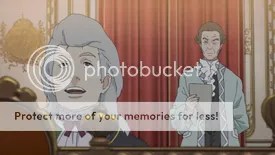
Le Chevalier D’Eon, Who knew Robespierre was drop dead gorgeous?

Having a historical setting with a cast of mostly real people is always tempting for me. This series also happens to be during one of my favorite periods and in a country with a fascinating, rich history. Now mix in a great studio, Production I.G., and a cast of complex characters and by my standards you have a winner. So I went into this series with a lot of expectations.

I tend to give any show that tries something different a chance to impress me. Also historical anime, even when it throws in wacky magical conspiracy theory, tends to be very good. After playing enough Mage: Sorcerers Crusade I might have been sold harder by the wacky magical conspiracy theory. I admit the Japanese have been obsessed with pre-revolutionary France since Rose of Versailles if not earlier. We also get to revisit the evilest man who was ever evil (or at least according to select anime), the Duke du Orléans. Maybe one day we will get an American Revolution anime. I think that could be hysterical and quite possibly really good.

Can we just talk about the packaging for this series a minute? From the slipcases to the box art to the booklets chockful of information, it seems like no stone went unturned with this (though the boxes change a bit as the series goes on). The booklets certainly being a highlight. I always like seeing conceptual art and the last book has some cute chibi art (which is rather far from the feeling of this series) just for fun. Each one also had an interview with someone working on the production such as the director and voice actors. All of these treats were really a welcome surprise to see on a series that seems to still go unnoticed here in the U.S.

I had a good laugh when they referenced Wikipedia as a source in the liner notes but they also have good references as well. I have no solid evidence but I think ADV had a feeling this was going to be the next big thing. I would go as far as to say they where think it was going to be the next Ghost in the Shell: Stand Alone Complex. It was an anime from Production I.G. that had a very western setting, a dark tone with intrigue, good animation and fight sequences, and a healthy amount of cool. Le Chevalier D’Eon is one of those shows where if you argue certain points it seems like a guaranteed success and if you argue other points it seems doomed for failure. Alas it never really caught on. It seems to have good reviews from people who saw it but it never got that broader appeal outside of critics. It is a shame too because this is a really well made anime.

Like many a good mystery we start with a murder. Lia de Beaumont’s body floats down the river in a coffin with the words Psalms scrawled on it. Her brother D’Eon de Beaumont vows to find out who killed her and is soon entangled in a continent spanning conspiracy involving a magical book called the Royal Psalms and a cabal of sorcerers called the Poets. King Louis XV has D’Eon along with three other royal agents investigate these revolutionaries and how they are tied into Lia’s murder. There investigation gets them involved with the royalty of Russia and England as well. D’Eon soon finds that as he investigates his sister’s murder that Lia has the ability to posses his body in order to enact her revenge against those who killed her. Lia’s ability to posses her brother is useful but D’Eon worries if he is losing himself and going down the wrong path.

The complexity of court politics is well portrayed here. While we do spend the most time with bigger names, it becomes clear that everything that is going on involves multitudes of people and planning. Just as in history, it takes a lot of people to form alliances and conspiracies. Trust and betrayal go hand in hand as we are taken through this story. Le Chavelier does a great job of creating a mist around everything. There is plenty of mystery to be unraveled because once one part is solved it opens the door to another and the secrets just get deeper and deeper. No one is as they seem and even those that appear the most straightforward will surprise you by the end.

Le Chevalier D’Eon draws us in on a seemingly simple murder mystery and slowly builds the complexity of the conspiracy that surrounds it. The problem with many series with mysteries and conspiracies is that they dole out answers painfully slow. This can lead to frustration especially when we only get answers at the very end. Le Chevalier is constantly giving us answers it is just that those answers lead us to new questions and greater questions as we slowly see the greater picture unfold. The mysteries are set up like a Matryoshka doll inside each other. The best part is that any twists and betrayals are clearly set up before hand. There are no surprises that come out of nowhere. There are some red herrings to keep things from being too easy to figure out. Oh and the Duke du Orléans being a bad guy is no surprise. Japan cannot and will not allow anything else.  

The real D’Eon du Beaumont is a fascinating historical spy. His life and the many secrets involved it in make him a prime candidate to make some great stories around. In our story here he is already a knight and informant of Louis the XV’s court. His loyalty and sense of duty certainly define him but they also blind him. With the addition of his sister’s spirit he seems to age a little as he realizes the world is anything but simple. Even his own sister had many secrets. While we are supposed to reconcile these two souls as one by the end, throughout the beginning D’Eon is sometimes quite incompetent in his abilities to spy and fight. Lia awakens often to make up for it. However, D’Eon continues to move forward in the series after misstep and betrayal at every turn. In the end he loses just about everything he believed in but he is able to make a life for himself despite it.

D’Eon is a real life cross-dressing spy so he is a good choice for a historically set anime. All of the places that the fictional D’Eon goes are actually places that the real life D’Eon served as a spy. Our fictional D’Eon starts off as a naive but determined young solider who wishes to solve his sister’s murder and work the betterment of his beloved France. Although D’Eon is a very skilled soldier his lack of experience in a world of intrigue holds him back. As the series goes on D’Eon becomes more skillful in his espionage but slowly finds that his fervent patriotism is often tested.

I love this little group of the “Four Musketeers.” Besides D’Eon, the members are all fictional but they contribute big things to this story. The camaraderie along with the varying degrees of knowledge about the world make it a great mix and keeps the relationships spry and intriguing. Everyone is learning, for better or for worse, from each other. Since the alliance is based on trust it is also a great way to throw mysteries and secrets at us and keep us guessing who is loyal. Robin was my favorite (he got an extra 10 points just for being named Robin) I found him fascinating to watch as his youth was chipped away at. He also has three grown men with very different ideas around him which makes things confusing for him.

The Four Musketeers cater to any sort of fan girl fantasy you might have. We have the soft and pretty D’Eon, they we have the charming rouge Durant, then the spunky boy Robin, and the distinguished gentleman Teillagory. Although each of the Musketeers is working together for the betterment of France each of them has their own agendas, alliances, and secrets that are constantly pulling them together and apart. Robin without a doubt grows the most out of all the characters. I guess that is understandable being that he is the youngest character. He has the most room to grow but it’s still an interesting and well-plotted transformation. Durant and Teillagory don’t change, instead we learn who they truly are over the course of the series.

Since we mentioned him in the title I suppose we should devote a little time to one of the more interesting characters. Maximilien Robespierre appears a little out of his actual historical context to good effect as one of the more enigmatic characters in the series. When he first appears he seems like an oh-so-evil villain but as we get to see him more we find he is certainly not strictly on the side of the devil. He has much more complex motivations and plans than it would first appear. And he does play the role of morally ambiguous pretty boy to fan-girl squealing perfection. Where is all the Robespierre yaoi doujinshi Japan?

Oh Robespierre, only Japan could take a historically blood-thirsty, devious revolutionary and make you root for him. He is handsome, look at that face and blond locks! He is also magical which is a nice way of side-stepping anyone’s analysis of historical fact. I also liked the way the characters was animated and directed, because he really speaks very little throughout the show. This also keeps him in a thick cloud of mystery. But indeed for a character that starts off as our seemingly baddie of the bad he becomes very gray and full of surprises by the end. I also like how he shapes and influences events yet to come at the end of the series.

We have an interesting mix of villains. The Poets range from well fleshed out antagonists to evil spell-caster of the week. Most of the antagonists are just as historical as the heroes with villains like Madame de Pompadour and the Comte de Saint-Germain. Come on what other anime is going to have the inventor of the sandwich, one of the leaders of the French Revolution, and the Count of Cagliostro (sans his castle) as antagonists. I enjoyed the fact that when they go to England they encounter Sir Francis Dashwood’s Hellfire Club as an antagonist but they never mention it by name.

The supernatural aspects of this series is what kept me on the fence in the beginning and to be truthful I never fully liked it. It wasn’t quite interwoven enough. The bulk of the story, the major mysteries, and the relationships could have been told using the superstitions of the time without making them real. However, as the story unfolds I came to accept this as part of this director’s vision. It keeps the series from being true historical fiction and perhaps that is what he wanted to prevent. If you push something this far no one can really cry foul at historical inaccuracies that they might otherwise. And was it just me who got a few good chuckles out of women coming out of the woodwork branded with the letters HO?

I actually liked the supernatural elements but I suppose that comes from my fascination with historical magical beliefs. I feel many of the elements of the story could have been told without them but it gives the series a certain flavor as if it were an alternate history or a secret shadow history. It’s mostly a matter of taste. I though it was reasonably well integrated with many of people’s powers and mysteries being based on rumors, conspiracy theories, and actual facts of their real life historical counterparts. It’s more than French historical fiction with mercury zombies and spell casting historical characters but you are going to have to accept those things if your going to get any enjoyment out of Le Chevalier D’Eon.

Production I.G. did a wonderful job of bringing this story to life. From the sword fights, to the outfits, to the backgrounds, the animation was well done and was able to capture the period. I would also be remiss to not mention how much I loved the opening and the song that came along with it. At the beginning I was often saying, “Wait, wait! Don’t skip it.” By the end Hisui didn’t even bother asking.

As you know, here at Reverse Thieves, we love a good mystery. Le Chevalier served us one gourmet batch of it that was thoroughly filling. I have to admit that it has been a long time since an ending genuinely surprised me in almost every revelation. This series was engrossing from beginning to end. And while you might not be able to grab up these beautiful DVDs very easily, a complete collection was just released at a very reasonable price!

Top 5 Anime Endings
5. Revolutionary Girl Utena
4. Higurashi no Naku Koro ni Kai
3. Irresponsible Captain Tylor
2. Cowboy Bebop
1. Maison Ikkoku

Hataraki Man, Three times the speed of a normal worker!

I had been interested in this series for a while. It probably started when I learned a little about it after seeing some of the artwork displayed at Kinokuniya.

Hiroko Matsukata is an editor at the entertainment magazine Weekly JIDAI. She is a workaholic that tends to even unnerve the other workaholics at her office. When she is facing a near impossible deadline she has been know to go into Hataraki (Working Man) mode and is able to do three times the work by blocking out everything else out and just working. Her love life seems to be on life support as she has a boyfriend, but they hardly ever seem to connect anymore due to their jobs. Hiroko is of course surrounded by a very colorful but extremely realistic cast of characters. This is the story of a hard working ambitious woman and the trials and tribulation of her career.

And while the show is about her, some of the episodes focus on one character that is surrounding her. So you get a lot of insight into the many people she encounters on a daily basis.

The Hataraki Man manga ran in the working man friendly seinen magazine Morning but most people categorize the manga and the anime as being josei. I have to say that it clearly has an appeal to both genders. I feel it leans towards josei if only for its strong, well written, female lead. Hataraki Man still retains a strong seinen feeling because although the story never ignores Hiroko’s romantic life it also never focuses on it more than any other part of her life as well.

My first question when I found out it ran in seinen magazine was, “Did a man write this?” Hiro is so well written, that I was going to have to pay major praise to the guy. She comes off as determined and competent without becoming a major bitch. However, that is not the case. A woman does write it and she is great at capturing the underlying emotions of a career oriented woman.

I feel this balance is what is what made this series so popular among women. A female lead who competes and succeeds in a male dominated workplace. As we mentioned in the post on shojo manga, much of shojo focuses primarily on the romance aspect and most josei is no different. But in focusing on Hiroko’s career we get a different type of manga that really fills a void. A salary-man manga for women who need a hero and role-model in a workplace that is not accustom to women taking positions of authority or power. There was even an article in the UK paper The Times about the manga’s effect on the Japanese work force.

Well, what I think is drawing is although we see Hiroko mostly through her pursuit of stories, you never feel that is the plot of what is going on. We learn about who Hiro is through her trials and tribulations at work but the series is in no way about the work, it is about the woman. I also like that she is not vilified for making her job the most important thing to her. Often times we see a story about a working woman but how her life is unfufilled in some way. Hataraki Man is telling a simple story about a woman who loves having a career and how that fills up her life.

Hiroko Matsukata is an excellent and well realized character but her coworkers are just as interesting and play off of Hiroko well. The chief editor of weekly JIDAI mostly acts as a comic relief character but has serious moments. Kimio Narita takes on several roles: friend, mentor, and a hard ass boss as his job and his personality require him to be. Fumiya Sugawara is the gruff paparazzi who often clashes with Hiroko. Her fellow female editors Maiko Kaji and Yumi Nogawa are both interesting looks into how you can be a successful woman in the industry while following alternative paths and philosophies to the one Hiroko Matsukata has taken. Her friend and coworker, Mayu Nagisa, represents a more stereotypical look at a female worker in an office environment. The newest editor Kunio Tanaka acts as a her greatest irritant by being Hiroko’s complete opposite in working philosophy. We also get to know several other people who work at the magazine and others outside of work. Each character gives us some insight into who Hiroko is while often having complete stories in their own right.

I have to say Tanaka represents the opposite of the Japanese work ethic and it is pure comedy gold seeing Hiro freaking out about it. Of course he is mostly oblivious. The stirking contrast gives good depth to them. In fact, all the characters in the office are distinctly different in the way they look, act, and view the world. I found myself intensely interested in a number of them and wished there was a little more time to get to know them.

I also feel the story telling is very organic. Stories started in one episode don’t necessarily have to be 100% concluded in the episode they start in. In the first episode for example, Hiroko writes a story uncovering a corrupt politician. The episode ends with a strong a definite conclusion but that does not mean that that story is never spoken of again. We later see other peoples’ reaction to the article, articles in other magazines about the politician, and follow subsequent articles being written about the politician throughout the series. This gives Hataraki Man a rich mature flavor that sets it apart and makes Hiroko’s life seem more realistic. Too often such a series would lend itself to each episode being very standalone and only certain key plot points every being ever carried over. Hataraki Man rises above that and gives you something to sink your teeth into.

This series is quite short (only 11 episodes) which, in my opinion, is a shame. It is the type of show that could go on and on with the way the stories are told. You tune in weekly for a little bit of Hataraki Man. You really only get a small piece of the pie. This could be attributed to the manga series being on hold, however since I haven’t read it I couldn’t really say. But Hiroko is the type of character you want to watch succeed and grow and change without having a real expectations of where she is going to end up.

I do find the place where the series ends very unusually. It ends on a very monuments event but not the type of event that a series of its type would normally. A manga would end on a big promotion, the completion of a monumental article, the conclusion of a major showdown, or the start of a new relationship. Instead the series ends on a personal tragedy and only begins to show how Hiroko beings to recover from it. Part of me wonders how much of the end is intentional and how much of the end is due to the fact that the author has placed the series on hold. Either way it gives the series a sense that no matter what happens Hiroko’s life and career go on. It shows us no matter what life throws at Hiroko she is always the Hataraki Man.