Arte (アルテ) by Kei Ohkubo
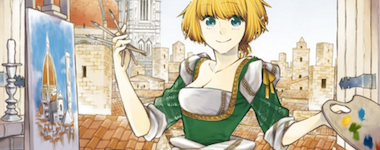
 The free online offerings of Comic Zenon are going strong. Each series has its own unique hook and look. Arte is a historical manga set in 16th century Europe about a noble woman who wants to become a professional painter. Kei Ohkubo’s deft line work and exquisite attention to detail bring the period setting to beautiful life.
Arte is determined to become a professional artist despite her family’s wishes. When she begins looking for a studio to apprentice at, all doors slam in her face until she meets disagreeable, but open-minded, Master Leo.
Arte starts off the series as a dreamer but quickly becomes embroiled in the realities of what it means to work as an artist. She faces losing her family, or worse to her, crawling back with her head bowed. The art world is not interested in her talent, seeing only her gender, which leads her to taking on impossible tasks just to gain a modicum of respect. Then there’s the physically hard work, long hours, and rigorous training of an apprentice which would be the same whether she was a girl or not.
Arte’s serendipitous meeting with Master Leo is sort of the last bit of dumb luck she is willing to accept. The series does a great job of depicting her strength and determination. Sometimes it comes at the detriment of her recognizing the kindness of others. But the kindness of men in a world where women have limited options is something Arte isn’t interested in; she knows she can’t grow or gain respect by relying on it.
I’m continually impressed by Arte and the subtle ways she and the series goes against the grain when it comes to her progress in the world. I do have a nagging fear that love will become a larger part of this story (mostly because Arte has been warned so vehemently against it if she wants to make her own path) but I have hopes that she will put it aside and focus on what she wants her life to be, just as she has so far in the story.
~ kate

 I admit one of the main reasons that this is my manga of the month is because my last pick was
 Reverse Thieves