Manga of the Month: December

RG Veda by CLAMP

There are few CLAMP works that one could actually say go under appreciated so while RG Veda is certainly not wholly forgotten, CLAMP’s current and growing fan base may not have gone all the way back to the beginning. RG Veda involves many familiar, but well done, fantastical elements including a worn torn land, magic, desolated clans, gods, a mysterious prophecy, an orphaned child, and a group of warriors who come together to fight a great traitor. The setting is distinctly another time and place sufficiently ingrained in many mythologies of the world. The crux of the story centers around Yasha and Ashura, two beings that are destined to meet and cause great deeds and calamities in the world. Yasha is a great warrior who defies both Taishakuten the Emperor, what his clan wants him to do, and even fate itself to protect Ashura who is but a child at the beginning of the story. Once he does this, there is no turning back, his path is set and he has no choice but to see it through. Along their quest to free the world of Taishakuten’s wrathful rule they encounter allies and foes, sometimes having difficulty telling one from the other. There are very fatalistic themes presented so pick your favorites carefully because no one is safe and it’s never clear what paths all will take. While CLAMP reexplores this theme in X (possibly with more polish), RG Veda is still an engrossing fantasy tale with rich characters and a setting that shows off an ability to carve out a memorable tale in just 10 books.

Maison Ikkoku by Rumiko Takahashi

If I had to pick one manga as the only manga I could ever read again it would be a tough choice but I am almost certain I would pick Maison Ikkoku. While she is hardly the best manga-ka Rumiko Takahashi is my favorite manga-ka. And my favorite work she has ever done is Maison Ikkoku. It captures everything that is wonderful about Rumiko Takahasi’s ability to write comedy and romantic drama that pulls at the hearts string while simultaneously tickling the funny bone. Most importantly it has a solid and wonderful conclusion that lets it avoid some of the criticism of her other work.

Yusaku Godai is a ronin desperately studying to get into college but the people in his apartment building keep disrupting his studies. Finally reaching his breaking point he is about to move out when he discovers there is a young and beautiful new apartment manager named Kyoko Otonashi. Godai instantly decides to stay and try and win her affections but he faces some major obstacles. First he is perpetually broke and horrifically unlucky. If anything can go wrong for him it will go wrong for him in the worst possible way. Secondly he quickly gains a rival for her attentions in the form of the handsome, witty, and rich tennis coach, Shun Mitaka. And the most important obstacle is the fact that Kyoko is a widow who has not moved on from her the death of her husband.  Can Godai find happiness or is he doomed to remain a loser for the rest of his life?

I doubt most people are going to connect as personally to the story of Maison Ikkoku as I have. I so empathize with Godai. I understand how it feels to be continually a day late and a dollar short. I know how it feels to wonder if you seemed destined to fail no matter what you do. I know how it is the continually reach for a goal that always seems ever distant. To feel you will never measure up to those around you. I also understand perfectly Godai’s love for Kyoko. Kyoko has a dignified beautify and a refined grace. She is strong yet gentle. She can be stern and even stubborn when pushed but by default she generous and kind. She always pushes Godai forward believing that he can be a better man and do more. At the same time she never lets him get away with giving up or slacking off. More than anything else she feels real. She is a mixture of sadness and happiness and strength and weakness that makes her feel authentic. Their slow building relationship and their give and take is what sold me on the series. But make no mistake I think this series will resonate with anyone who reads it. The delightful mixture of comedy and romance is superbly balanced and draws you in. By taking the scenic route towards the conclusion it makes the overall trip much fun and ultimately rewarding. I could go no but what you should take away from this is that more than any other manga I suggest everyone go out an read at least the first book of Maison Ikkoku.

If anyone knows me well enough they know that I do not whip out Maison Ikkoku as anything but The Big Gun. And with that I announce that Manga on the Month is going on hiatus. This blog is always a work in progress so we decided to mix things up once again. We are replacing the manga of the month with the Speakeasy. Once a month Narutaki and I will pick something that is on our mind and give you a little dissertation on the subject. I think it will be a little more personal and should thought provoking and entertaining for both you the readers and us. See you next year!

Manga of the Month: November

Honey and Clover by Chika Umino

If Honey and Clover was always sepia toned it would never seem horrifically out of place. Honey and Clover is a joyful if melancholy tinged looked back on college life. It looks at the lives of 5 students at an art college in Tokyo. The main theme is trying to figure out where you are going. Everyone is trying to discover where exactly they are headed with their lives before they enter the “real” world. Of course being college students there are also messy and mature relationships do deal with along the way. Everyone’s story is a mixture of joy and sadness like the bitterness and sweetness of a honey and clover sandwich.

Yuta Takemoto is effectively the main character of the story. He is a directionless art student who falls in love with with Hagumi Hanamoto, the niece of one of his professors. His friend and super senior Shinobu Morita falls in love with her at the same time. But Hagu is a shy and extremely sheltered young genius and finds it hard to interact with others. Takumi Mayama is a also their friend who is poised on graduating. Their mutual friend Ayumi Yamada is in love with Takumi but he only has eyes for Rika Harada a young widow whose soul is a broken as her body. We see all of them go through school and try desperately try to find where they need to be after college.

I think one of the biggest appeals for Honey and Clover is it’s more mature setting. We get so many high school anime but it is a nice change of pace to see a solid dramedy set with some older protagonists. I think these older characters who eventually have to deal with jobs and more mature relationships is refreshing while still having the vibrancy of the college experience. All of the characters are very relatable and amusing. You will feel triumph at their successes and heartbreak with their losses. The comedy is extremely well done and prevents the series from being gray colored slice of life quagmire. Shinbou could get his own spin off series and all the women and most of the men reading would probably buy two copies each. Honey and Clover is a amazing series that captures the highlights and low points of being young enough to have the world before you but old enough to know how scary that is.

Palette of 12 Secret Colors by Nari Kusakawa

I have absolutely fallen in love with the work manga-ka Nari Kusakawa does. My most recent passion is for Palette of 12 Secret Colors which takes place on island that houses the most beautiful birds in the world. Cello a “palette” in training (and many others) use the birds’ bright colors to change ordinary things, like cloth and rocks, into precious treasures that are sought the world over. But Cello’s magic doesn’t work like anyone else and usually manifests itself best when she is in danger but her unique abilities get her into some interesting situations. Cello is positive, funny, passionate, and easy to love. As the story goes on we see Cello struggle with how she wants to use her palette skills after her training is complete. However, most things take a back seat to the budding romance between her and the school nurse. She often turns to Dr. Guell, he is blunt but funny and caring, so much so you can’t help but root for these two to come together. Things between these two move along at a brisk but believable pace through a series of mostly humorous incidents about town involving the birds of the island, random students, thieves, and old friends. While the majority of time is spent on Cello or Dr. Guell, there is a colorful side cast that liven things up constantly from Cello’s rambunctious dad who forms an amusing kinship with Dr. Guell to Yoyo and Olga’s scheming to keep their masters apart that ensures funny happenings both in the background and foreground of this manga. Palette of 12 Secret Colors is a charming combination of fantasy, romance, and a huge helping of comedy. And with a mere 6 books to collect, it shouldn’t be missed!

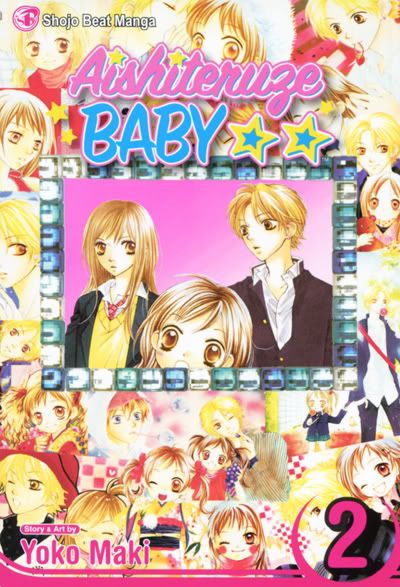
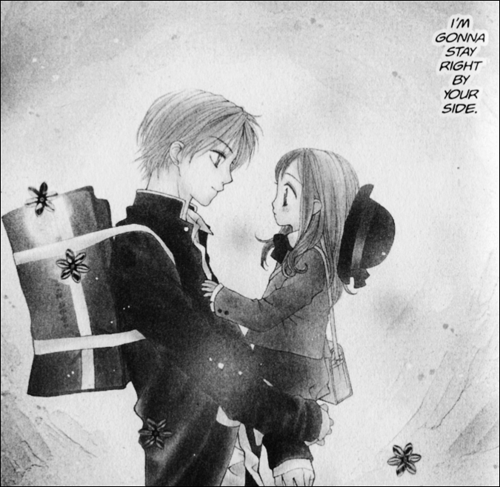
Aishiteruze Baby, Just the two of us.


Yoko Maki was one of the first manga-ka I discovered in the wondrous world of scanlations. Yoko Maki’s work often have fun female leads with a little bite and cute boys abound with a focus on friendship and budding romance. She also draws in the somewhere between simple and complex with a perchance for the sweet and cute. As I read more of her pieces she quickly climbed my charts for a wonderful shojo manga artist that remained untranslated (and all of her pieces besides this one remain so).

But it wasn’t until later, when VIZ picked up her (what was at the time one of her most recent works) sweet series about a boy who finds himself with a new responsibility in the form a cute little girl, did I actually get around to finishing this story.

Unlike Narutaki, my interest in Aishiteruze Baby came from a more unusual direction.

The last manga review on Anime Jump before it went into hibernation was a review by Chad Clayton for Aishiteruze Baby. What interested me was the odd dichotomy in opinions. I had heard quite a few enthusiastically positive reviews of Aishiteruze Baby. They usually involved some combination of sweet, funny, and heartwarming. But while no one was claiming it was high art the reviews almost always said that is was refreshing and delightful shojo dramedy.

Chad’s review on the other hand was pure venom. It was the complete and total deconstruction of the plot of the first book that makes the series out to be an artificial calculating monstrosity that was more emotional torture than entertainment. So I went into reading the manga with a great deal of anticipation. I had had long been curious where my opinion would come in on the matter. While I was pretty sure I was not going to love it as much as it’s most die hard fans I was also pretty sure I could never hate it as much as its extremely harsh critics.

What I was wondering is what side would I lean towards in the end and how much would I lean towards it.

Continue reading