
 The first chapter of any manga we see rarely anything close to the preliminary draft of the same manga concept. You usually only get one chance to make a first impression so manga artists and their editors tweak, refine, trim their initial ideas that start rather rough around the edges until they are lean, mean, long-term series generating machines. The rougher drafts of existing work are often lost to the sea of time and then mostly only mentioned off handily in interviews. But on occasion we get to see behind the curtain when one-shots are published either to test the waters on a series or as a special treat for an existing series (or to fill some space in a tankobon).
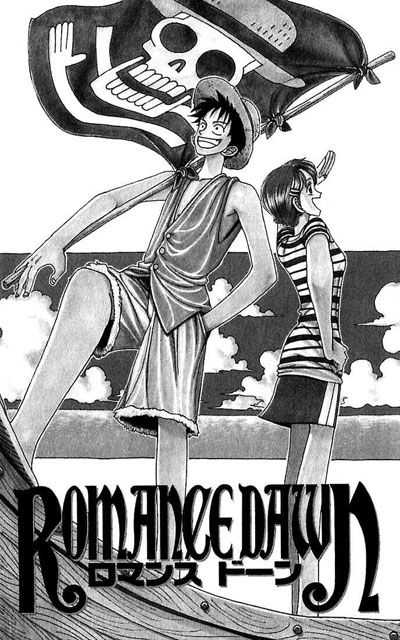
There are three published version of Romance Dawn which eventually we go on to be the series we know as One Piece today. While the overall premise is instantly recognizable you can see the slow evolution of the concepts that would eventually become the finished product that is one of the best-selling comics ever. While Luffy and his pirate adventures are a constant not much else is. Main elements of the world are changed or dropped as the series is refined. Elements like witchcarft are removed and the quest for title of King of the Pirates is added. Almost all the chapters have a Nami like character who is absent in the final first chapter and introduced later on in the series. The progression from the initial idea to the polished work is quite intriguing even when we don’t see all the steps involved.
You can see a similar pattern when looking at the initial one-shot release of manga. Often times a popular one-shot manga will be spun off into a full series if the audience is receptive to the idea. That is often the reason to publish many one-shot manga in the first place. This phenomenon is often a good way to see the formative process of an initial concept to a finished product in an in-between stage. Even stories like Rumiko Takahashi’s Those Self Selfish Aliens or Fire Tripper give interesting insights into the full works that would become Urusei Yatsura and Inuyasha. In this post I will be examining two manga and how they evolve from their initial one-shot premiere to their final initial debut as a full-fledged story.
Continue reading →


 Reverse Thieves