Otaku Diaries Part 3: Sticks, stones, AND words can hurt you!

#0009
I was bullied in school, sometimes worse than others. It’s another thing I don’t like to revisit.

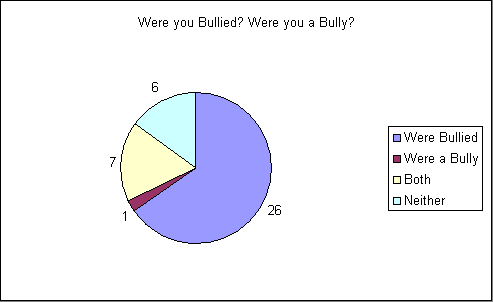
While bullying is never quite how it is in fiction it is all too real for most nerds, geeks, and otaku. Almost everyone in the survey has been bullied at some point. I am sure if we all look back over our lives we will notice that sometime someone has tried to hold dominion over us physically or mentally to the point that it could only be called bullying. Sometimes it’s a family member, sometimes it’s someone at school, sometimes it’s someone at work, sometimes it’s long term, and sometimes it’s a few isolated incidents. For most people, it is a trial you must face in their life at least once. But over all the weaker people perceive you the more people with predatory natures will be attracted to you. People who have geeky hobbies tend to be people who give off an aura of vulnerability and therefore they will get harassed more than other people.

This particular article in the series probably isn’t too surprising to anyone. If there is one thing that has been played to death on television and movies it is that nerds/dorks/geeks/what have you are notorious for being picked on. Though those instances are usually pretty exaggerated, the underlying idea that this happens a lot is still relevant. And while many of us think of bullying to be a thing sectioned off for childhood, there is plenty of it going on in workplaces. Bullying can take many forms from physical to verbal to isolation and it is always a coin toss to say which is more detrimental to a person. In this survey it became clear, for the most part, that almost everyone had suffered (or is still under such strain) under someone’s hand and it is not something easily forgotten.

#0055
I was a standard victim in junior high, but I was sensitive and took it very personally which caused problems later on.

#0030
I was picked on quite a bit from when I first started school on, and am still picked on now.

#0094
I was mostly ignored and excluded in school more than bullied.

People who were willing to share their kinkiest fantasies, their shocking misdeeds, their heartbreaking sorrows, and their darkest fears in great detail but would give one line answers when it came to being bullied. Even the safety of anonymity prevented many people from sharing their experiences which shows how powerfully it effects some. When people did bring up their stories they were usually painful and almost everyone who was bullied had a sense of shame about telling the story. This coupled with the number of people shows there is an extreme stigma not only about being bullied but even talking about it. This victim’s shame keeps things instead bottle up inside them. While bullying leads to anger management problems, low self esteem, depression, isolation, and all other sorts of physiological damage, keeping such feelings bottled up inside surely aggravates them. Also the few people who admitted to bullying others were just as silent on the whole matter. They would off handily mention that they did it and then say no more. But that sort of guilt is much more understandable.

#0019
I was picked on for being a nerd. . . . Frequently, groups of girls I’d never met would walk up to me, say “see that girl? SHE LIKES YOU!” before indicating a friend of theirs whom they were teasing and then bursting into laughter like the notion of a girl liking me was the funniest goddamn thing in the world . . . .

#0016
I was teased pretty much throughout my entire school career. . . . Starting in middle school I was sexually harassed by a group of boys who were spreading rumors that my best friend and I were lesbians . . . and the principals we complained to didn’t do anything about it.

#0045
I was smaller than most and kind of scrawny growing up, so I got bullied a bit until the late years of high school when I started getting bigger. I also was a bit of an outcast when it came to social standing, so that didn’t help any.

While many people listed varying degrees of being bullied ranging from quite severe to only minor isolated instances, the thoroughness of their accounts was given sparingly. For the most part people were reluctant to go into details about their experiences in this instance, sometimes in lieu of the fact they elaborated extensively in other parts of the survey. Many answered with a simple “Yes.” Perhaps the other things we may not tell the whole world about don’t sit on the same level of humiliation, helplessness, or erosion of confidence as bullying does for many people. There are multiple ways people are bullied so it is unclear what kind was most prevalent. Though many of the group mentioned their “looks” to be a factor. And while slowly over the course of reading through our participants survey’s we came to understand their personalities, it doesn’t really give you a direct line in many cases as to why people become victims. Or perhaps it didn’t give us a direct link to who they became later on.

#0099
It did a lot for my confidence I’ll tell you because I have absolutely none.

#0065
I had a bad temper, so kids found me to be a wonderful target, but I always got the feeling that even if it didn’t bother me they’d still do it.

#0011
I was picked on for much of elementary and middle school to the point of being beaten up fairly regularly. I wound up learning some martial arts to defend myself.

I am very surprised that whenever someone mentioned bullying they mentioned being bullied at school. I am sure that people who took the survey also got bullied by siblings, coworkers, customers, and a variety of other people but for one reason or another people, including myself, associate school with bulling more than anywhere else. I suppose that when siblings bully us it is seen as part of life unless they are particularly horrific about it. When you are at work it is seen as more of being lower on the food chain. But cruelty by follow students at school sticks out in our memories more than any other type of bullying. We are at our most emotionally and mentally vulnerable so any and all traumas are more severe because we have not yet developed all the tools to deal with such abuse.

Being bullied can taint your views of school and for some, maybe for many, it doesn’t make you long for childhood days gone by. But that doesn’t mean that everyone handled their situations the same. For some being bullied caused them to get angry, for others it sent them into depression, some in turn bullied others, and still others said they learned to turn the other cheek to such things. With all of these varying reactions it becomes clearer that being bullied doesn’t take its lead from your personality. For some it made them work harder to achieve, to prove themselves, and for others it left them feeling hurt and reduced their confidence to nil. Even the people that bullied, expressed remorse and guilt for their actions. Looking years after, you can see how it shaped each individual.

#0036
I became quite vindictive towards my tormentors and bystanders eventually.

#0073
At the time, I thought of it as friendly gestures, but now I’m very sure I bullied him.

I think this question more than many others showed a limitation to this form of doing the Otaku Diaries. While the email gave the participants both anonymity and good deal of time to answer lots of questions it also meant we were not able to ask follow up questions. Had we been face to face with many of the participants we would have asked for more detail about being bullied. I would have liked to hear a little more from the people who bullied other people, too. One or two people mentioned that since they were bullied they would never bully anyone else but almost anyone who was a bully had been bullied as well. But the information we got was quite illuminating on its own. It show us an ugly and tragic fact of most of our participants lives. But it was a universal hurdle that the majority had to face at one point of another.

Some take bullying very seriously, and some shrug it off as a the way of the world. Everyone in the survey had their own ideas about what it meant to them. What happens to us is just as important as how we move on from it (or if we ever do). This is certainly a fascinating topic that could have a survey all its own. More importantly, in connection with this survey is that the geek being bullied factor is a very real piece of growing up. Even if you weren’t bullied or did any bullying, you probably saw it happen. This is just one more important connection found between so many people sharing common hobbies.
Look for a new Otaku Diaries Post
the first Monday of every month!

Otaku Diaries Part 2: Otaku! Threat or Menace?

 #0044
Otakudom is all that I am.

The story in this portion of the Otaku Diaries starts almost at the very genesis of the project itself. When we sent out an initial call for people to participate in the Otaku Dairies, one of the first places we put up a request was in the forums at MyAnimeList. Several people spoke up saying that while they were interested in the project they felt that is was detrimental to call the project the “Otaku Diaries” because of the negativity surrounding the word “otaku.” This negative reaction threw me off guard. I was aware that there was a growing backlash against the English definition of otaku but I never realized it was that strong on the Internet. This incident along with several other conversations encouraged us to add a few question about how the participants of the survey view the word “otaku.” We asked the participants what their thoughts were on the word, if they considered themselves otaku, would they admit to being otaku to others, and would they be more or less willing to date or be friends with people who called themselves otaku.

#0034
. . . I tend to be sympathetic to the otaku personality traits that are often thought of as negative, and of course while “otaku” covers a wide range of interests, it probably means there are more things the potential friend/date and I could enjoy doing together.

#0016
I think of it as a word that Japanophiles apply to themselves to sound even more “different.”

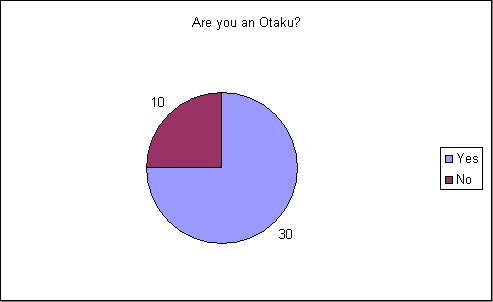
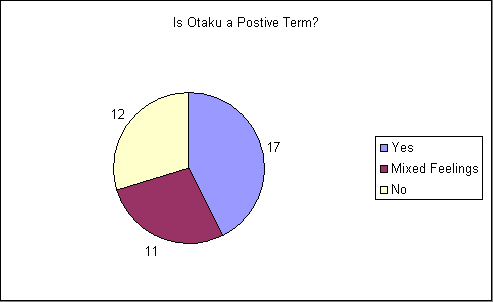
Even though we called this the Otaku Diaries, it was interesting to see how everyone reacted to the word “otaku.” As you can see, 1/4 of the people who answered our call proclaimed themselves not otaku even with us leading the charge of calling the participants in our survey just that. I, too, was thrown by many complaints early on in the titling of this experiment but some of that can be chalked up to the Internet being a place where people love to argue. Some but not all. From many answers, we can tell that people are becoming more aware of the history of the word “otaku” in Japan. However, be that as it may the majority of people still found the word positive in their current state or were atleast middling. Afterall, “otaku” is used quite frequently in American anime fandom, just look around, we just got back from Otakon, many of us read OtakuUSA, and you can even find a date on OtakuBooty. I think you’d be hard pressed to say that the use of “otaku” in these instances is being bandied about in a negative manner.

#0009
I used to think it was a positive label, now I’m convinced otherwise. I’ve yet to see a convincing argument that would make me change my mind. Otakudom is often synonymous with social ineptitude and derangement.

#0080
It shows how dedicated you are to what you love. Although there are some who have made the term less than desirable, I think the term should be associated with good.

Loanwords are an interesting thing. Usually a language utilizes a foreign word because the word fills a niche in the language adopting the word but on occasion when a word is taken up by another language the meaning changes. Some times this shift in definition is subtle and other times it is a complete reinvention of the word. “Otaku” is is a clear example of a subtle but profound shift in the meaning. To make a very long story short, “otaku” usually means hardcore anime fan in specific and dedicated fan in general. The main difference between its meaning in America and Japan is that the Japanese see it more as a mark of shame with a distinctly negative connotation and Americans generally see it as a badge of honor with a distinctly positive connotation. The majority in this instance still considers “otaku” to be a positive word. Though several people did mention that at one time or another they had had only a rose-colored view of the word but have since stricken the word from their vocabulary when talking about themselves.

#0079
. . . I’ve never felt the Americanized version of the term applied to me . . . but the label itself fits me fairly well.

#0081
When I think of otaku, I think of the definition that seems to be focused here: a strong anime fan. I feel like there’s already a connection made by sharing the same interests, so it would be easier to relate to someone who calls themselves an otaku by that meaning.

#0069
I don’t describe myself as an otaku anymore. Am I a fan, yes. Am I a big fan, yes. Am I obsessed, no.

“Otaku” is a rare word that has become defined by the person saying it in this survey. Some people even mentioned that based on who was using the word “otaku” and the way in which it was said can make it an insult. But at the same time there is a very real chasm dividing people about it. Many said with 100% certainly that it was a badge of honor, proof that you were a proud and knowledgeable fan. And then some participants insisted that they are just a “fan” and the word “otaku” holds no place in themselves. But is fan not short for fanatic, a word synonymous with extreme devotion and obsession? Just as that word has taken on a more broad appeal (though we certainly see news reports of “crazed fans”), maybe the word “otaku” in the anime community will continue to diversify itself.

#0019
Being called an otaku is an insult. It’s not something you want to be. At the same time, I am one. I wish I wasn’t, but I am.

#0067
I don’t ever use the word otaku to describe myself and rarely use it to describe others—to me it is derogatory, as it is in Japan.

#0045
There’s no shame to me in using it as a badge of honor to explain what and who you are. So using it in a description might even make me more inclined to meet or date them because it means at least a shared interest in that sort of thing.

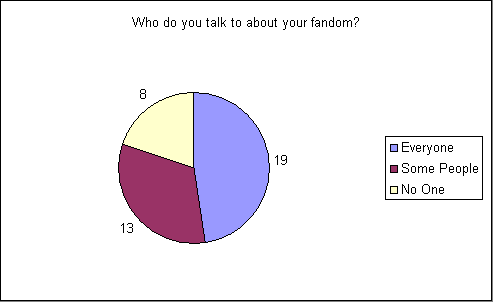
Of note is that several people mentioned they found the word “otaku” negative but would still attribute it to themselves and even mention it in casual conversation. Essentially they are in so deep that they could not hide it. Contributors to the survey listed co-workers as the most common group of people they were reluctant to mention their anime hobby to. There were a wide variety of reasons from shame to not talking about their personal lives at work. Most people either assumed the people they would not tell about their anime fandom either did not care, would not get it, or would look down on them. This is hardly limited to anime and manga, in general people are more likely to hide their hobbies if society in general labels those activities as nerdy. Everyone on the survey would tell someone else they knew who was into anime though. This goes to show why anime conventions and Internet sites about anime are so popular. Once people feel they are safe, they are willing open up. I think people want to share their fandom with others but have been burnt in the past and therefore guard what they see as vulnerabilities.

#0063
I do identify myself as an anime fan . . . online fairly readily . . . and in real life it’s fairly obvious, too. . . . Basically if you’ve met me for more than 30-minutes, I’ve probably made myself clear.

#0094
I don’t really like to share much about myself in general let alone what nerdy hobbies I am into.

It’s also important to mention that the age range of people who kept their fandom private varied greatly. Many people have attributed an overzealous nature to younger fans, but here we saw that even those still in high school or recently graduated had just as many qualms with the word “otaku” and/or sharing that they were indeed anime fans with the rest of their social circle. Equally telling were people saying they would befriend someone calling themselves “otaku” and also many inferring that they would know from the start they would have something in common with the person. This was rather refreshing to me as I’ve mentioned I see a splintering in fandom. In earlier days if you met someone who liked anime you would more than likely have some common ground, but now with so many choices out there many feel liking anime is not enough to build on. Here we found the inclination to be very much alive.

#0015
I haven’t told my friends, I’m worried they either wouldn’t know what it is or just judge me. . . .

#0096
I have used the word “otaku” to describe myself. I usually have to explain what that is to my family and friends. . . . Despite its offenses in Japan, the word “otaku” has come to represent a group that I identify with in America.

I still think that a majority of anime fandom still has a decent self image. Most people who answered the survey saw at least some benefit of being an anime fan. They had some amount of pride in enjoying what they liked. Yes, there were some people who saw their fandom as an albatross around their necks but overall people saw it and something that enriched their lives even if it was just by being something entertaining that passed the time.

There were a lot of people who answered plainly, and proudly, “I am an otaku.” This seems to correlate with a continuing movement in the U.S. of geeks/nerds/dorks/what have you coming together and embracing the words that were once hurled at them. Taking back words is a way to show strength and also show you can accept yourself. As we explore self-image further in subsequent posts you’ll see what we have seen, probably much like the rest of the world, people’s self-worth lies somewhere in the middle ground. But just looking at the results here, that should be apparent.

The question that interests me most coming out of these particular results is how would anime fans answer this same question 5 or 10 years from now? How much is this movement to return otaku back to its original Japanese meaning going to catch on? Or is this movement a passing fad that will mostly be forgotten by all but the most die-hard advocates? Also some Japanese fans and creators have noted they enjoy that English fandom has a mostly positive spin on the word otaku. What effect will the constantly changing definition of the word in Japan have on the English speaking fandom? How strong is the idea for people to take the word back in Japan? Only time will truly tell us the answer.


Look for a new Otaku Diaries Post
the first Monday of every month!

Otaku Diaries Part 1: Lies, damn lies, and statistics

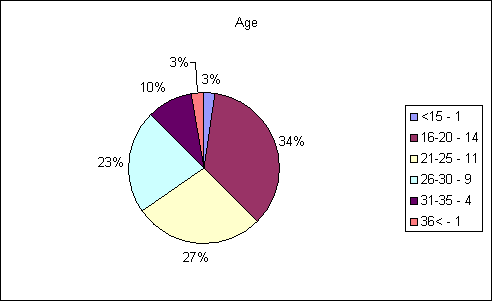
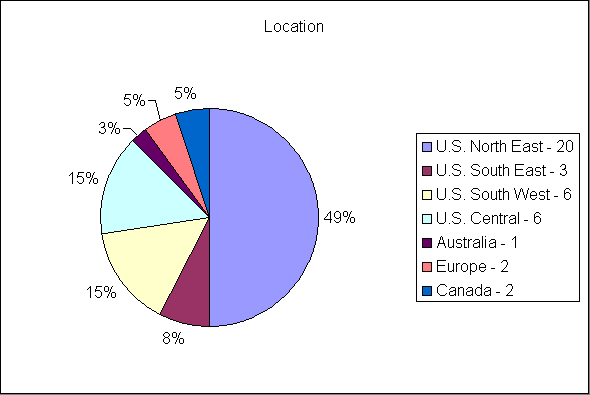
So begins what is our most ambitious project so far, the Otaku Diaries. The Otaku Diaries is a peek into the minds and lives of a diverse selection of members of anime fandom. We asked for their stories of what makes them fans and how has their anime fandom effected their lives and loves. We asked what do anime and manga fans have in common and what makes them individuals. We have asked how they feel about anime and manga, their fellow fans , and themselves. I am sure anyone who has ever been a part of an anime club or gone to a convention has wonder what is up with that guy or what is that girl’s story. The people who responded to fill out the survey come from a wide of variety of backgrounds from all over the world. We had participants of all ages, genders, ethnicities, professions, and backgrounds. The only requirement that was a necessity was a love of anime and manga.

This idea came up quite suddenly and almost as suddenly it became a reality. Maybe we are just a curious duo, and since we paint ourselves as sleuths maybe this is no surprise, but we just plain wanted to know about the growing hordes of otaku out there. People involved heavily in a hobby have something that bonds them to their fellow connoisseurs. However, it becomes increasingly clear the more people you meet that there is no one story that is the same and many don’t seem to deem their peers as equals. But maybe, just maybe, there are more things to relate to than previously thought. In fact, one of the reasons I was curious to do this is the sweeping diversity and sometimes fracturing of anime fandom.

We asked 40 anime fans for a brief self-description along with 125 questions broken into in three categories. Questions asked about the user’s relationships, self-image, and views of otakudom. We tried to pick questions that gave us a detailed look into the lives of each of our participants. Through these answers we hopped to gain a better understanding of how each participant dealt with their friends, families, lovers, fellow anime fans, and themselves.

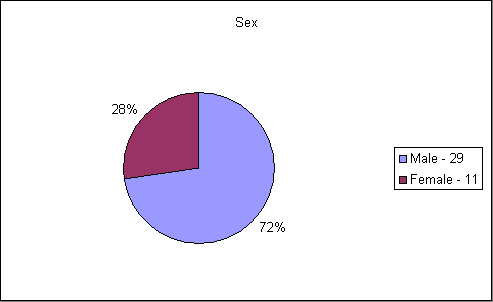
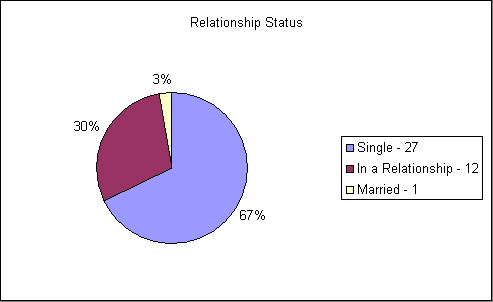
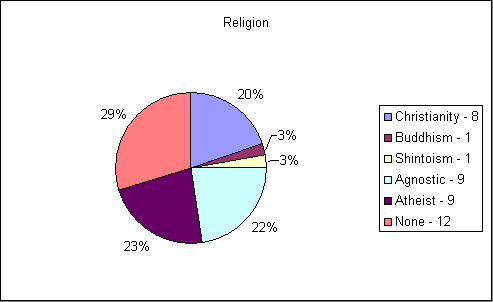
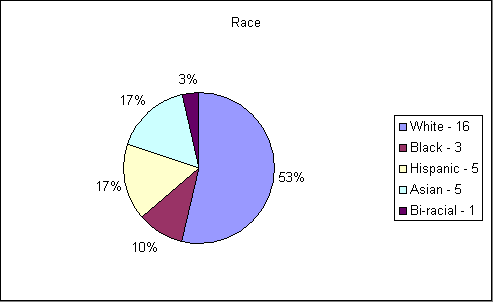
Any good research should start with some basic statistics of your group! So before diving in to the more telling answers in coming posts we wanted you to have any idea of just who our participants are:


Our goal was never to view fandom as a whole because our sample size is just too small. It would be nice to do so but we just don’t have the man power and time for that sort of experiment. We would need at least 1,000 participants to make any sort solid conclusions. Instead we focused on getting a more intimate look at a smaller sample size. So when we makes observations it is important to remember that we are only basing our observations on the people included in our survey. We are not as foolish as to assume that a sample of 40 people necessarily fully represent of all of anime fandom. If we were to do that, just by our statistics only we would conclude that there are no gays or lesbians in anime and manga fandom. Which is clearly crazy talk. Such a small sample size will also lead to some amount of skewed results due to the roulette of chance. This does not mean that there is nothing to be gained other than entertainment for the experiment. There are truths and revelations in our participants answers. They are just more likely to be personal answers rather than universal ones.

I don’t think we have aspired so high as to make any concrete observations here. Heck, we are missing the entire non-English speaking world of anime fans! But there is something to be learned from any one person, let alone having 40 telling you their stories. I was looking forward to seeing the varying degrees by which all fans live but also to see how their stories relate to my own. Perhaps that sounds incredibly self-serving but I think everyone, us included, will walk away from this venture with a bit of a better understanding of their fellow anime neighbors.

Look for a new Otaku Diaries Post
the first Monday of every month!