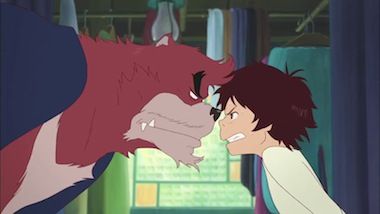
 One of the problems with success can be that it sets a baseline that can be very hard to live up to. That makes sense. When you have a big hit audiences often don’t just want what the liked with a twist. They want your next work to be bigger, better, deeper, broader, and richer. Anything less can be seen as a failure or step backwards. It can also lead to sequels and follow-up works that overreach their bounds trying to outdo their simpler predecessor. It often leads to big bloated affairs that are merely a pale imitation of what worked. J. D. Salinger and The Catcher in the Rye or Dave Chappelle and Chappelle’s Show are prime examples where an artist was so successful that they run away from the spotlight out of fear that they could not follow-up their big profile success.
Mamoru Hosoda has a lot of high-profile successes. I actively have to rack my brain to think of negative reviews for The Girl Who Leapt Through Time and Summer Wars and all of his films are practically magnets for awards. He is a name that often get brought up when people ask who the next Hayao Miyazaki will be. Heck, even we brought up that idea on the blog. That means lots of eyes are all over whatever he does comparing it what he has done before, what all the best animators in Japan are doing, as well as just putting up his work against the best animation from around the world. You don’t really get that sort of critical analysis if you’re doing the latest Jewelpet movie. This can put a lot of pressure on a director and a movie.
If anyone can live up to that heavy burden it would be Mamoru Hosoda. The real question is not if Hosoda has the potential to overcome this wall of expectations. It is rather can this particular movie do it?
 The Boy and the Beast marks a departure from Mamoru Hosoda’s other original theatrical releases. The Girl Who Leapt Through Time, Summer Wars, and Wolf Children were written by or co-written with Satoko Okudera in which Mr. Hosoda worked on the concept and helmed the director’s chair. In the Boy and the Beast Mr. Hosoda also became its sole writer.
 Reverse Thieves