 So a couple of weekends ago I was checking out the Saturday morning fare of cartoons. The channels were run through from Nicktoons to Cartoon Network and finally to the CW where it stopped at an episode of Dragonball Z Kai followed by back-to-back Yu-Gi-Oh 5D’s episodes in a block known as “Toonzai.” TV stations nowadays always have their logos in the right corner and many more have some information running in the left corner perhaps telling you what is coming up next, etc. But I was pretty shocked when this came flying across the screen:

That bright blue wave, with a dude surfing atop it, with orange glow lines coming off him . . . not part of Yu-Gi-Oh 5D’s which is playing behind it. And though I didn’t capture the sound, he actually yells “TOONZAAAAI!!” as he hurtles across the screen. Let me reiterate that the show is going on when this happens, characters were talking and events were happening yet all of that is obscured by the obnoxious logo that tells me something I already know: that this is part of the Toonzai cartoon block. This happened during Dragonball Z Kai as well and I can only assume in all other shows in these timeslots. What exactly is being accomplished here that wouldn’t be if it were just in the left-hand corner of the screen without sound? The complete disregard for the audience is phenomenal.
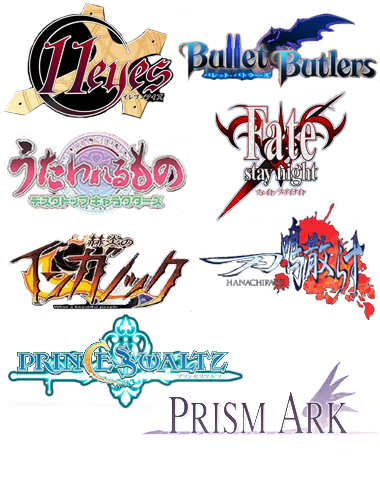
 Round Three visual novel logo designs! In the last two posts we looked at the two most easily spotted designs for visual novels:
  When comparing all three logo posts side by side, it becomes immediately obvious that each approach is very different. And that is what you want to have happen! Logos are meant to tell you something and give you an immediate feel to what you are going to be seeing (using, eating, whatever, etc.). Overall I saw a little more variety in the fantasy visual novel genre but you can see glean some common properties from them. There is a feeling of complexity to these logos that is composed of not only the many pieces involved by each piece having a flair of it’s own.
 Because of a random comment that occurred while looking at pages from King of RPG’s, I found myself taking a closer look at the use of screentone in manga the past couple of weeks. Essentially the comment was that something about the way OEL uses screen tone feels different from manga which it is supposed to be derived from. But what exactly was the difference, well, that required closer inspection, thus I type before you now.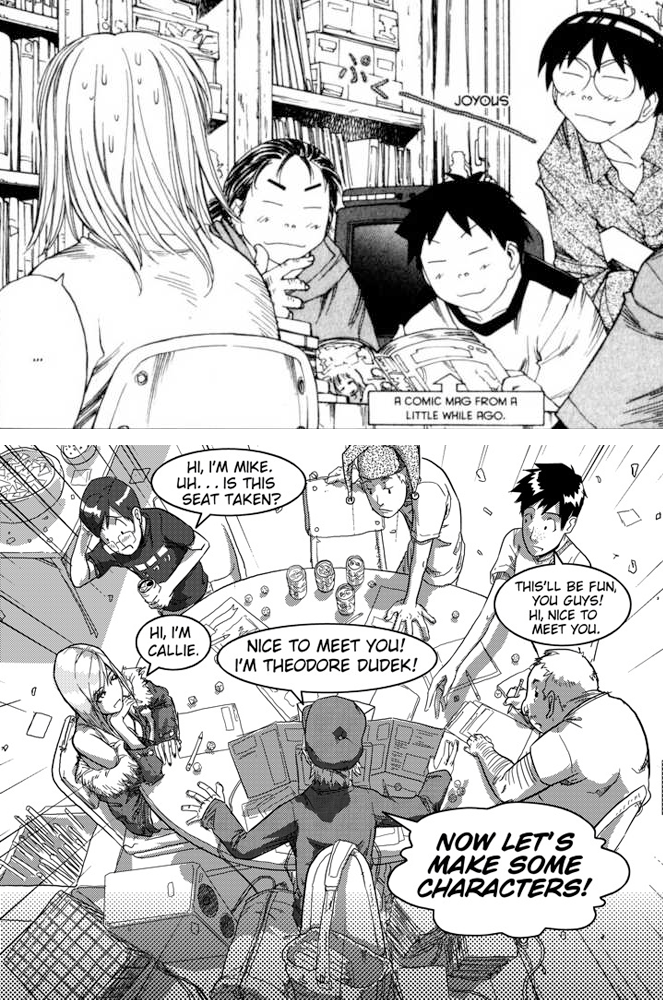
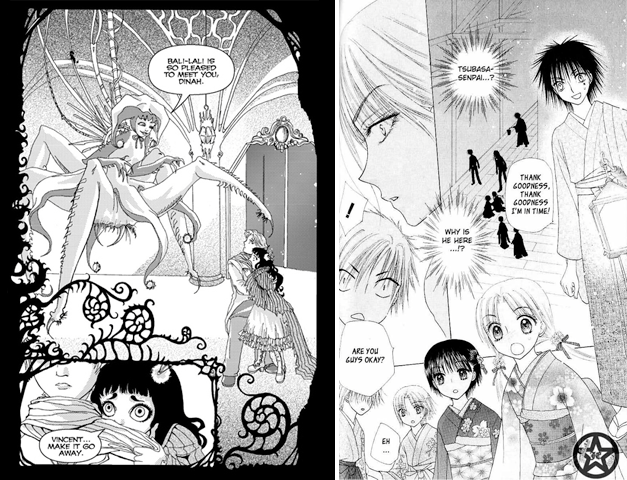
 Reverse Thieves