 It is no secret that I love Fate/Stay Night but there is one thing that gets my goat (to say it politely without swearing like a sailor who broke his arm.) I cannot stand people in the Type-Moon fan base who call Sakura Matou a slut. I know that it has mostly grown into a joke just like the controversy with Kannagi. This means most of the people saying it now are just doing it because they think it is funny not because they honestly care. But this whole attitude comes from a seed of true belief. There are people who brand her with the label of slut and that gets on my nerves.
I will admit that of the three main heroines of Fate/Stay Night, Sakura firmly ranks third on my list. But I find her a hard character to hate. If anything Sakura might remind me a little too much of myself for me to be anything but slightly uncomfortable about her. Our positive and negative qualities are scarily similar. But she has many traits that people who love visual novels tend to look for. She is shy, sweet, hard working, and loyal. In the normal ending of Heaven’s Feel she dies patiently waiting for Shiro to come home even though she knows that day will never come. Fans usually eat that up like chocolate, bacon, and Ambrosia flavored love. Sakura is strong with the moe side of the force which earns her points as well. And the fact that she is very buxom cannot be overlooked as well.

And yet people hate Sakura despite the fact that all signs points to her being a fan favorite. They call her a whore because her moe purity is broken when you learn she has been raped. She has been sexually assaulted for years by her brother Shinji. It is made painfully clear that Shinji has an abusive and dominating hold on her and all sexual activity between them is nonconsensual. The mere concept of blaming a rape victim for the crime committed against her angers me to no end. To punish her on top of that compounds my fury one hundred fold. While Sakura might come onto Shiro very aggressively in Heaven’s Feel I still find the accusation of her being a slut uncalled for. Since she is no longer a virgin she is no longer worth affection? Because she can be aggressive she is no longer worth affection?
People are free to dislike Sakura for any number of valid reasons. But if you hate her for being a “slut” then I feel free to dislike you. It might seem odd to get worked up about a fictional character but it is not so much the hate for the character that annoys me as much as the attitude towards women and sexuality that gets under my skin. I feel it is a sign of deeper sickness and misogyny in parts of the male anime fanbase that makes me ill. As long as it exists I will continue to complain when it rears its ugly head.
 Because of a random comment that occurred while looking at pages from King of RPG’s, I found myself taking a closer look at the use of screentone in manga the past couple of weeks. Essentially the comment was that something about the way OEL uses screen tone feels different from manga which it is supposed to be derived from. But what exactly was the difference, well, that required closer inspection, thus I type before you now.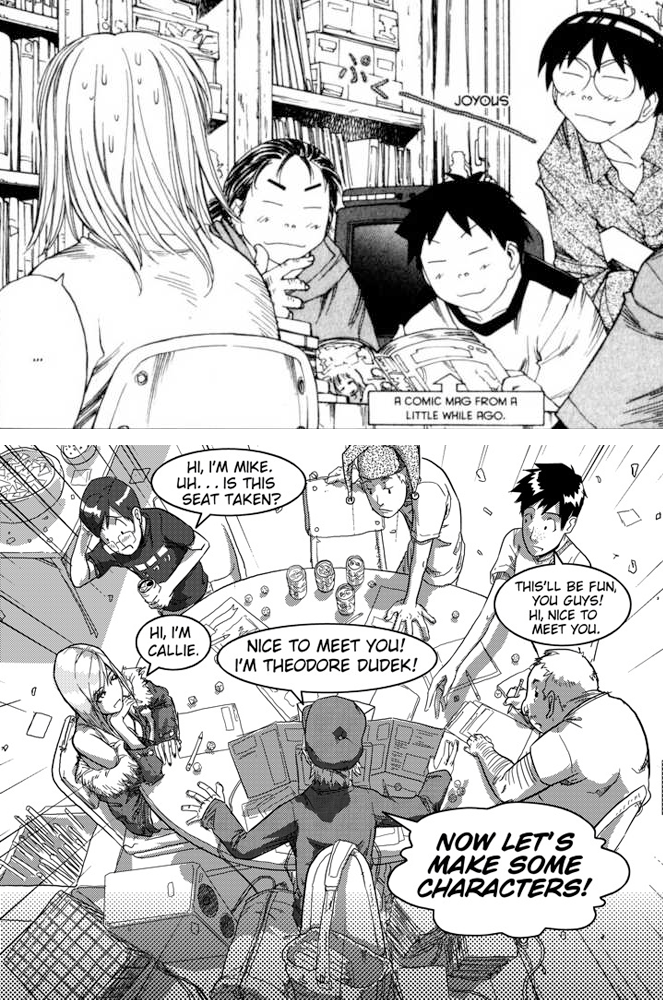
 Reverse Thieves